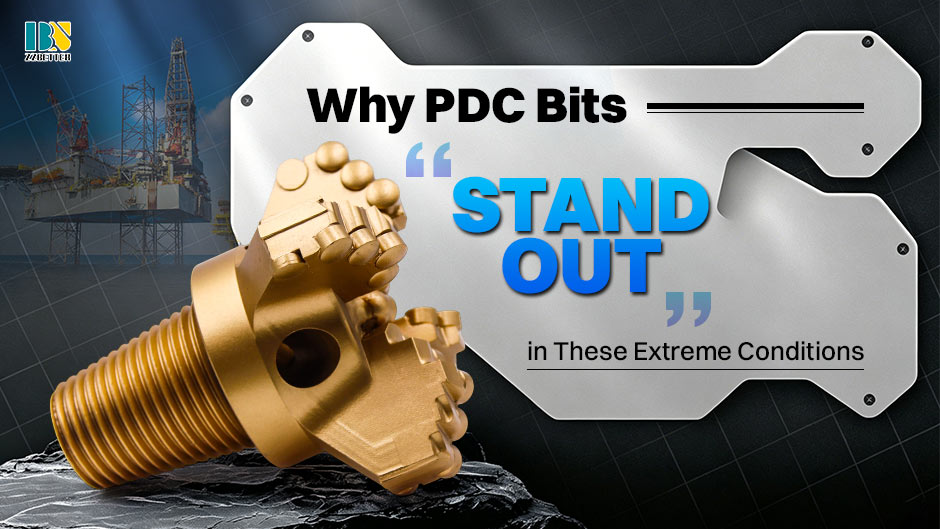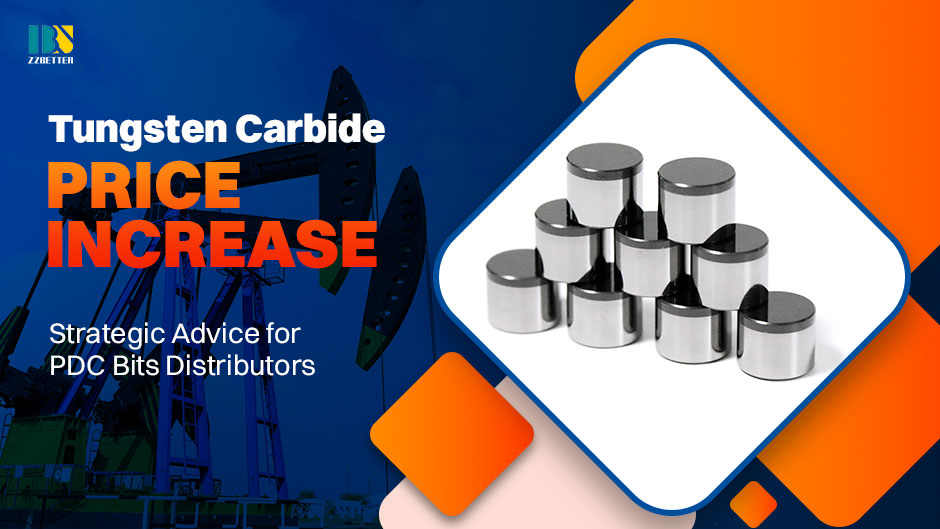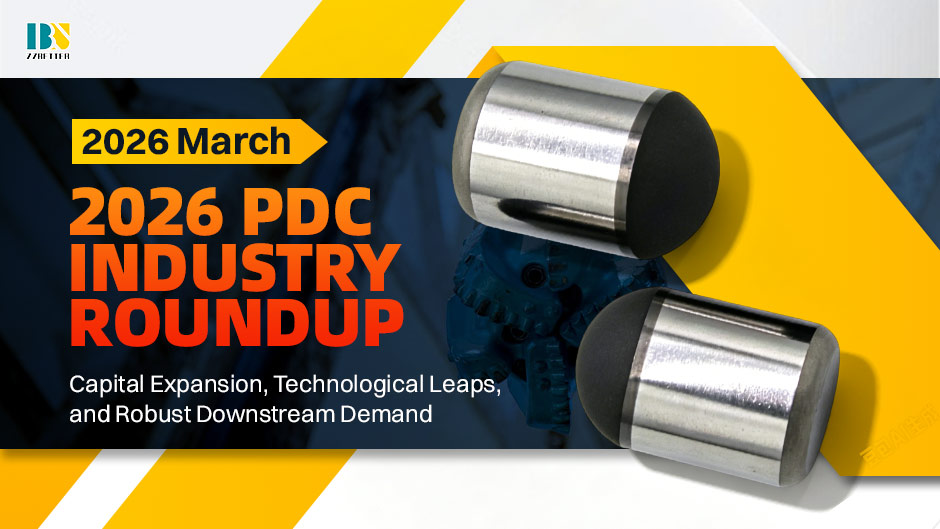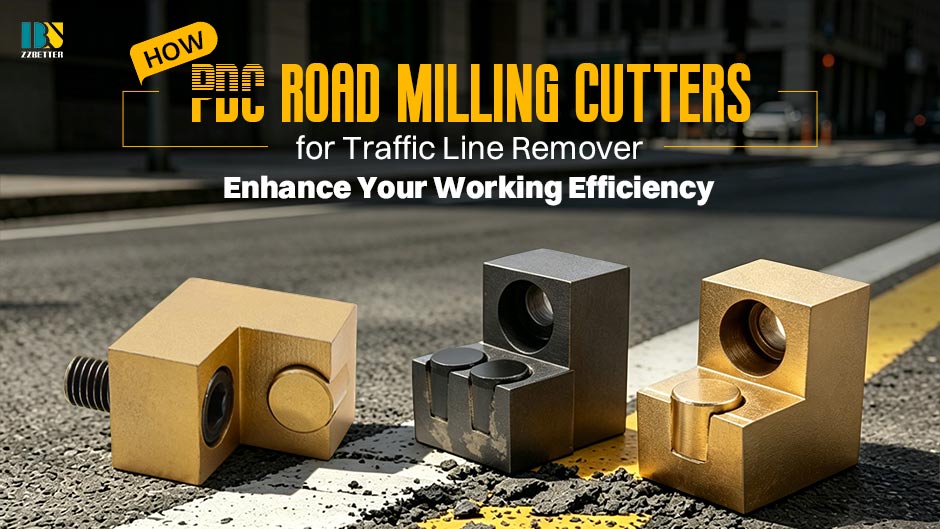
In the demanding world of industrial drilling and cutting, the transition from cemented tungsten carbide (carbide) buttons to Polycrystalline Diamond Compact (PDC) buttons represents one of the most significant material advancements of the last half-century. While carbide buttons were long the industry standard, PDC buttons have steadily and profoundly displaced them in a wide range of applications. This shift is driven by a fundamental difference in material properties, which translates into a dramatic divergence in performance, economics, and application scope.
Head-to-Head: A Performance Comparison
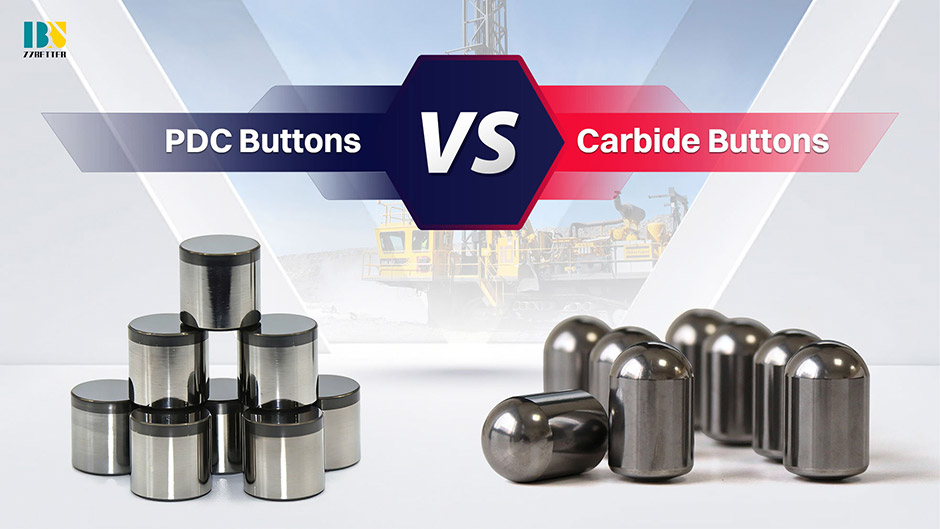
The core distinction lies in the cutting surface. A carbide button is a monolithic piece of sintered tungsten carbide, a cermet material renowned for its excellent compressive strength and good toughness. A PDC button, however, is a composite: a layer of synthetic, polycrystalline diamond (the hardest material known) integrally bonded to a tungsten carbide substrate.
This difference manifests in several key performance areas:
1.Wear Resistance and Tool Life: This is the most decisive advantage of PDC. The diamond table of a PDC button exhibits abrasion resistance that is orders of magnitude greater than even the hardest grade of cemented carbide. In abrasive formations like sandstone, quartzite, or certain shales, a carbide button can dull, flatten, and wear out rapidly, leading to a swift decline in the Rate of Penetration (ROP). A PDC button, in contrast, maintains its sharp cutting edge exponentially longer. This can extend service life from hours or days to weeks or months, reducing the frequency of costly and time-consuming tool changes.
2.Cutting Efficiency and Energy Use: A sharp, hard edge cuts more efficiently than a blunt, worn one. PDC buttons, by maintaining their sharpness, consistently shear rock with less specific energy (energy required to remove a unit volume of rock). This translates to higher, more sustained ROPs and lower energy consumption per meter drilled. A carbide button, as it wears, requires more downward force and torque to achieve the same cutting effect, wasting energy and straining drilling equipment.
3.Application Range: Carbide buttons perform adequately in soft to medium-hard, non-abrasive rock. However, their performance degrades severely in hard, abrasive, and quartz-rich formations. PDC buttons excel precisely in these challenging conditions. Furthermore, PDC technology has expanded into extremely hard rock applications with the development of thermally stable products and advanced geometries.
4.Limitations and Trade-offs: Carbide's primary advantage is its superior impact toughness. In extremely fractured, blocky, or heterogeneous rock where high-impact shocks are common, a carbide button may resist catastrophic chipping better than some early-generation PDC buttons. PDC is inherently more brittle. However, modern advancements in interface engineering, leached diamond layers, and innovative substrate designs have dramatically improved the impact resistance of PDC, narrowing this gap significantly. Additionally, cost remains a factor: the initial purchase price of a PDC button is higher than that of a carbide equivalent.
The Driving Force of Replacement: Total Cost of Ownership (TCO)
The higher upfront cost of PDC is overwhelmingly justified by its transformative impact on the Total Cost of Ownership (TCO). This is the core reason for its widespread adoption. The TCO calculation extends far beyond the price of a single button or bit.
● Reduced Downtime: Fewer tool changes mean more productive drilling hours.
● Lower Consumable Costs: While a PDC button costs more, the number of buttons (and entire drill bits) consumed over a project's lifespan plummets.
● Increased Productivity: Higher, sustained ROP allows projects to be completed faster.
● Reduced Ancillary Costs: Less frequent mobilization/demobilization of support equipment and crews for bit changes.
For most soft to medium-hard, and especially abrasive formations, the economic case is clear. The savings in time and operational costs far outweigh the initial material premium.
The Application Shift: Where PDC Has Taken Over
The replacement has been most comprehensive in:
● Oil & Gas Drilling: PDC cutters (larger cousins of buttons) have almost entirely replaced roller-cone bits in thousands of formations, dominating directional and horizontal drilling.
● Mining (Blast Hole & Exploration): In surface and underground mining for coal, copper, iron ore, and more, PDC-button bits deliver faster, straighter holes with vastly reduced bit consumption.
● Geotechnical and Water Well Drilling: The efficiency and long life of PDC are prized for foundation piling, water wells, and seismic holes.
● Soft to Medium-Hard Rock Tunneling and Mining: Roadheaders, shearers, and raise borers increasingly use PDC-tipped tools for continuous, efficient excavation.
Carbide buttons still find niches where their high impact toughness is irreplaceable—such as in very blocky, fractured ground where extreme point loading is unpredictable, or in some very small-diameter, low-cost tooling where the PDC premium cannot be justified.
Conclusion
The gradual but steady replacement of carbide buttons by PDC buttons is a story of technological evolution driven by hard economics. It is not merely a substitution of one material for another; it is a paradigm shift from a "wear-and-replace" model to a "precision-and-endurance" model. By offering an unparalleled combination of longevity, cutting efficiency, and lower total operational cost, PDC technology has redefined the boundaries of what is possible in drilling and excavation, making it the indispensable cutting edge of modern industry.