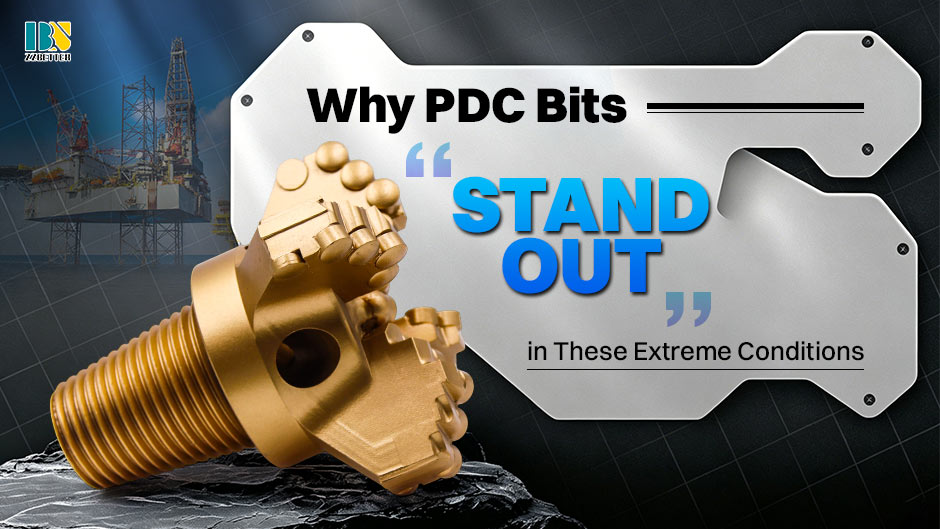
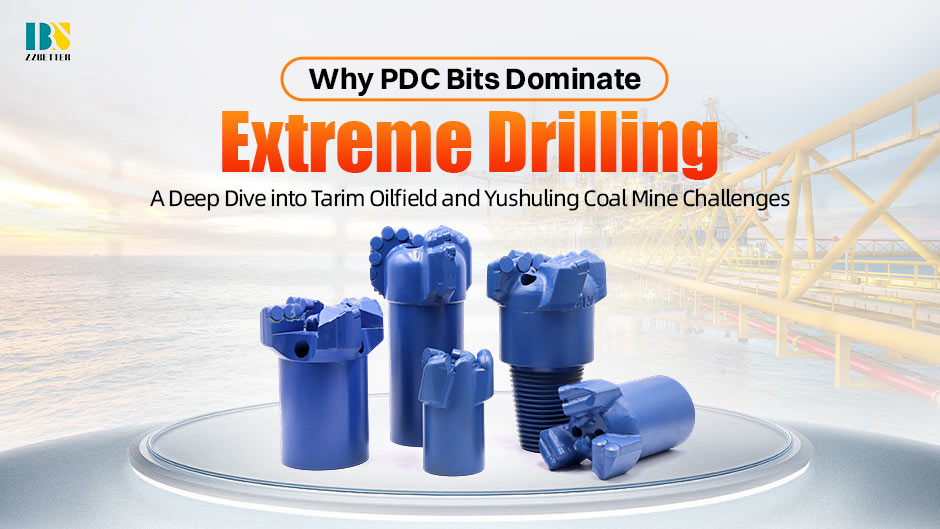
 In the demanding world of subsurface resource extraction, not all drilling tools are created equal. Recent procurement activities—such as the urgent tender from the Tarim Oilfield in Xinjiang and the equipment bids from the Yushuling Coal Mine—serve as perfect case studies for understanding why Polycrystalline Diamond Compact (PDC) bits have become the industry standard. These are not routine purchases; they are responses to some of the most extreme geological challenges on the planet.
To understand why PDC bits "stand out," we must first understand what they are up against. This article provides a detailed technical analysis of the extreme drilling difficulties in ultra-deep oil and gas wells and hard-rock coal mining, and explains the specific material science and engineering advantages that make PDC drill bits the superior choice.
The "Hell-Level" Challenges of Tarim Oilfield and Yushuling Coal Mine
1. The Tarim Oilfield: Conquering the "Mount Everest" Underground
The Tarim Basin in Xinjiang is one of China's most promising, yet most difficult, hydrocarbon regions. The primary challenge can be summed up in one word: depth. However, the implications of that depth are multifaceted.
• Ultra-Deep Formations and Extreme Stress: Wells in the Tarim Oilfield frequently exceed depths of 8,000 meters. At these depths, drilling tools encounter geological formations that have been compacted by the weight of kilometers of overlying rock. The resulting unconfined compressive strength (UCS) of the rock often exceeds 180 MPa. This is comparable to trying to drill through solid steel or reinforced concrete.
• Highly Abrasive Lithology: The deep strata are not uniform. They consist of complex sequences of conglomerates and quartz-rich sandstones. Quartz is harder than most metals, meaning that as a drill bit turns, the rock acts like sandpaper, rapidly wearing down conventional steel teeth.
• High-Pressure, High-Temperature (HPHT) Environments: At these depths, bottom-hole temperatures can soar past 150°C (302°F) . This requires any drilling tool to maintain its structural integrity and hardness under extreme thermal stress, a condition known as thermal stability.
• The Efficiency Bottleneck: Because of the above factors, traditional drilling methods often fail. In the southern margin of the Junggar Basin (a similar geological context), it was reported that some imported bits struggled to achieve an average footage of less than 100 meters per bit. This leads to frequent "trips" (pulling the drill string out to change the bit), which can cost millions of dollars and waste weeks of rig time.
2. The Yushuling Coal Mine: Navigating a "Labyrinth" of Abrasive Rock
While oil drilling goes deep, coal mining often goes wide, encountering different but equally severe mechanical challenges. The Yushuling Coal Mine presents a classic case of hard rock excavation.
• Extremely Hard Rock Masses: The surrounding rock in the mine's roadways consists primarily of gritstone and sandy conglomerate rich in feldspar and quartz, with a UCS frequently exceeding 90 MPa. Standard coal mining picks (drag bits) used on continuous miners often fail catastrophically. Instead of cutting the rock, the pick grinds against it, generating intense heat and friction, leading to rapid wear and tear.
• High Abrasivity: The high quartz content gives the rock a severe abrasivity. This acts as a grinding medium that quickly dulls any cutting structure that relies on brute force rather than shearing action.
• Demand for Composite Rock Breaking: Modern coal mining safety standards require advanced techniques like "pulsed hydraulic fracturing" to pre-condition hard rock. This indicates that purely mechanical methods are insufficient for fast excavation, requiring drill bits that can create precise holes for these auxiliary systems.
• Precision Drilling for Safety: With the increased focus on mine safety, techniques like "replacing roadways with boreholes" are used to drain methane gas. This requires drilling large-diameter, near-horizontal directional long boreholes. The drill bit must not only last long but also offer excellent steerability to navigate precisely through coal seams and interlayered rock.