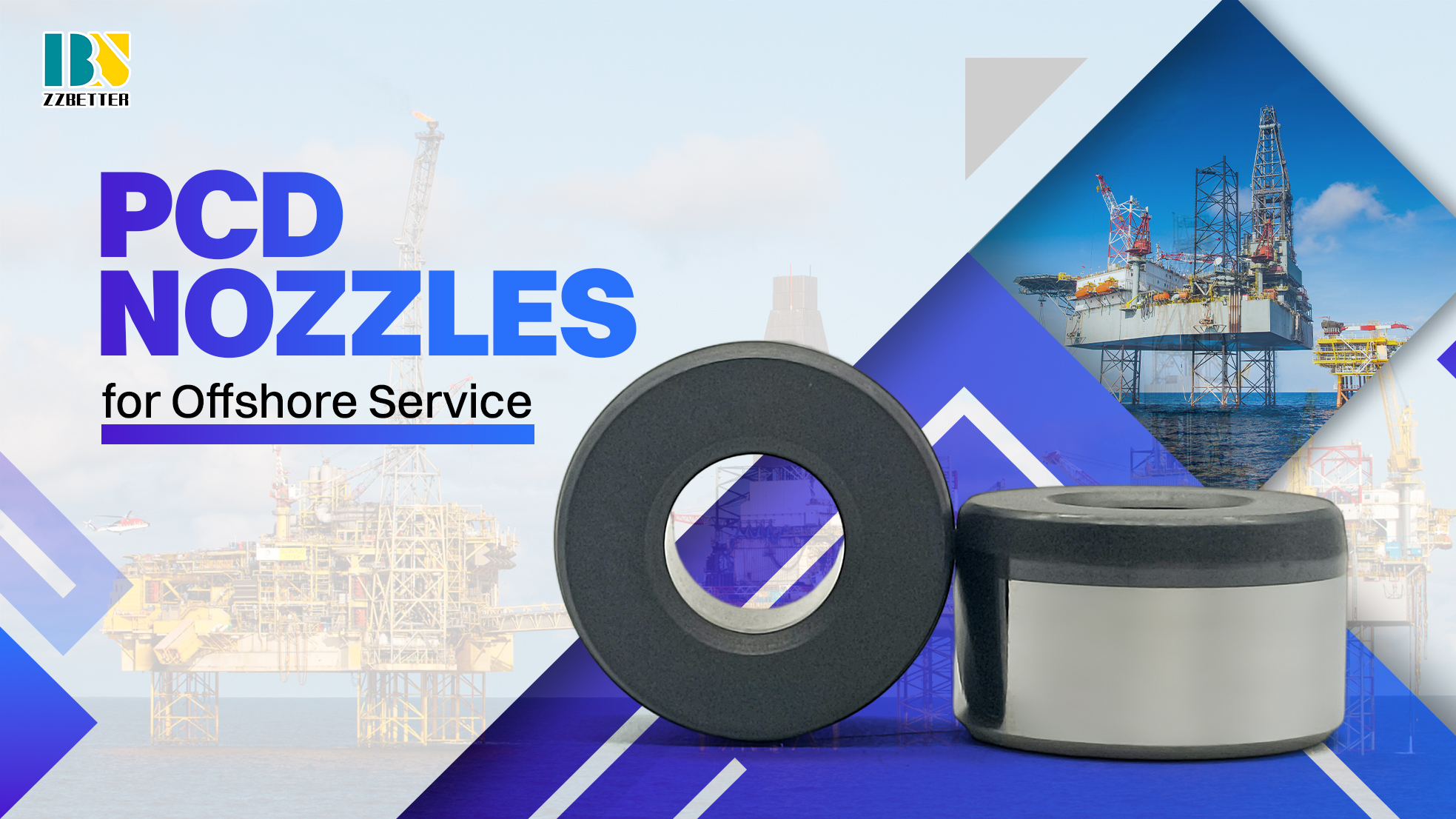
Polycrystalline diamond (PCD) nozzles have become the default solution for abrasive-slurry duties in seawater. Their extraordinary hardness translates into orders-of-magnitude longer life than metallic or ceramic alternatives, cutting downtime, maintenance spend and—most critically—the risk of subsea failure.
Why PCD survives where others fail
The combination of suspended solids, chloride-rich electrolytes and high-velocity flow creates a simultaneous abrasion–corrosion–erosion attack that quickly destroys conventional materials. PCD addresses each mechanism:
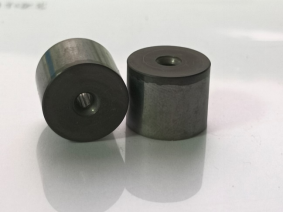
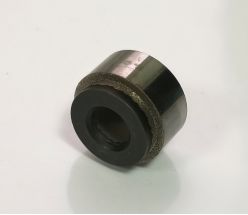
Challenge in Sea Environment | How PCD Addresses This Challenge |
Extreme Abrasion | PCD is one of the hardest materials known (second only to single-crystal diamond), making it extremely resistant to abrasive wear from sand, silt, shell fragments and other solids in seawater. |
Corrosion (Chlorides) | Diamond crystals are inert; marine-grade PCD is cobalt-leached or uses ceramic binders to eliminate metallic corrosion paths. |
High Pressure & Erosion | PCD withstands high-velocity jetting and pumping flows, maintaining precise orifice size and spray pattern far longer than other materials. |
Long Service Life & Reliability | PCD nozzles last 10–100× longer than tungsten carbide, avoiding subsea retrieval campaigns that can cost hundreds of thousands of dollars per day. |
PCD nozzle VS Other Nozzle Materials
To understand why PCD is chosen, it's helpful to compare it to common alternatives.
Material | Key advantages | Limitations | Typical offshore use-case |
Polycrystalline Diamond (PCD) | Ultimate abrasion & erosion resistance; corrosion-proof after cobalt leaching; life 10–100× vs. WC. | Brittle—chips under point impact; high CAPEX; diamond machining required. | Abrasive slurry, seawater jetting, subsea choke nozzles. |
Tungsten Carbide (WC-Co) | Good toughness; wide vendor base; moderate price. | Co binder corrodes in chloride media; wear rate 5–20× higher than PCD. | Low-salinity or short-life duties, impact-prone locations. |
Silicon Carbide (SiC) | Excellent corrosion resistance; wear performance 2–3× better than WC. | Brittle fracture risk; cost midpoint between WC & PCD. | Corrosive yet moderate-abrasion brines, chemical injection. |
316/ duplex Stainless Steel | Very tough; immune to chloride SCC; lowest price. | < 200 HV hardness—wears rapidly in any solids-laden stream. | Clean chemical mist, potable water, fire-suppression spray. |
Alumina Ceramic (Al₂O₃) | Good corrosion & moderate wear resistance; electric insulator. | Fragile—thermal or mechanical shock causes shattering. | Low-impact, lightly abrasive slurries, laboratory jets. |
For any abrasive fluid handling application in a sea environment, PCD nozzles should be the default material for serious consideration. Their legendary wear resistance directly translates into superior operational uptime, predictability, and lower long-term costs. While the upfront investment is significant, it is a strategic one that pays for itself many times over, especially in remote and expensive offshore operations where equipment failure is not an option.
When selecting a PCD nozzle, ZZbetter will always be your choice. ZZbetter provides a product engineered to resist both abrasion and corrosion effectively.