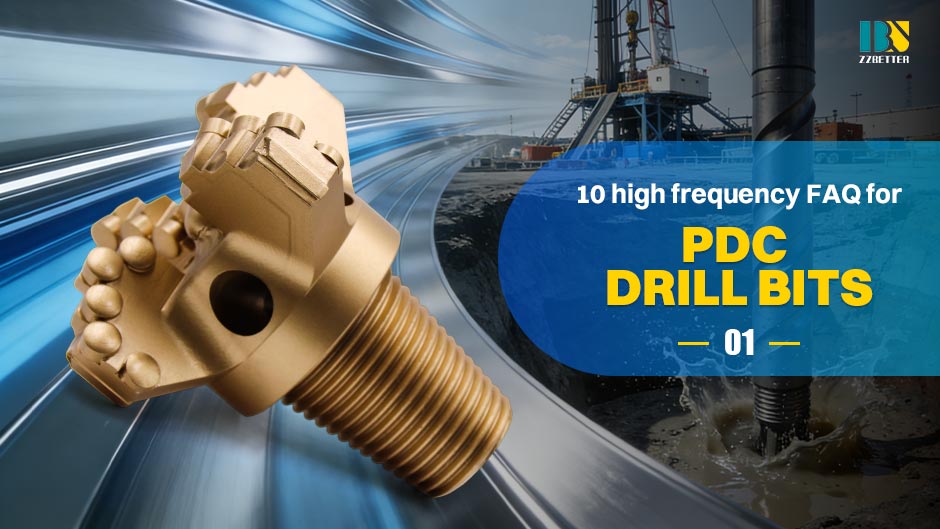
1. Question: What are the main advantages of using a PDC bit over a roller cone bit in our application?
- Answer: The primary advantages are Rate of Penetration (ROP), durability, and cost-per-foot.
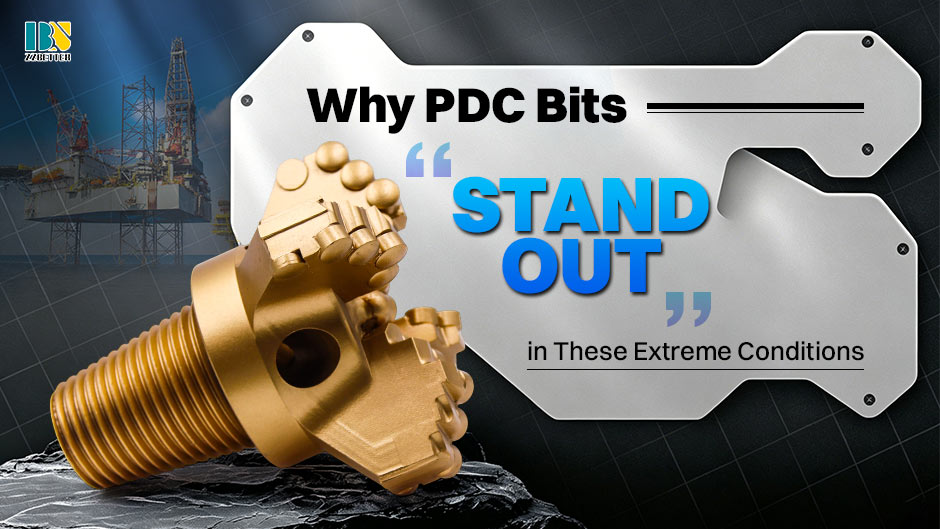
- ROP: PDC bits shear rock with continuous cutting action, while roller cone bits crush and chip it. This results in significantly faster ROP, often 30-50% higher, reducing your overall drilling time.
- Durability: PDC bits have no moving parts. This eliminates bearing failures common in roller cone bits, allowing them to stay in the hole longer, especially in long, homogeneous sections.
- Cost-Per-Foot: The combination of higher ROP and longer life drastically reduces your drilling cost per foot. While the initial investment is higher, the ROI is superior in the right formations. They are ideal for soft to medium-hard, non-abrasive, and ductile formations like shale, clay, marl, and salt.
2. Question: For which specific rock formations is this PDC bit model designed, and where will it underperform?
- Answer: This model is specifically engineered for soft to medium-hard, abrasive sandstones and shales.
- It excels in: Ductile, pliable formations where the shearing action is most efficient. The cutters are arranged in a blade configuration with high backrake angles for stability and are made with premium, abrasion-resistant diamond tables to handle the sandstone.
- It will underperform in: Highly interbedded formations (rapidly changing between hard and soft rock), fractured/heterogeneous formations, and extremely hard, abrasive strata like chert or pyrite. In these conditions, the cutters are prone to impact damage and catastrophic failure. For such applications, we would recommend a hybrid bit or a roller cone bit.
3. Question: How do you ensure the bit's stability and prevent whirl and vibration?
- Answer: We employ several design features to ensure stability:
- Blade and Cutter Layout: Our bits use an asymmetric blade profile and variable backrake angles on the cutters. This disrupts the harmonic patterns that lead to whirl.
- Depth-of-Cut Control (DOCC): This technology uses specially placed elements (e.g., ovoids, diamonds) on the blade crests to actively manage the depth-of-cut of the PDC cutters. This prevents the bit from "digging in" too deeply, which is a primary cause of torsional vibration (stick-slip).
- Gage Geometry: A robust, fortified gage section with active and passive cutting elements ensures the bit stays centered and maintains full-gage hole, minimizing lateral vibration.
4. Question: What is the expected total footage and life for this bit under optimal conditions?
- Answer: While it depends on specific drilling parameters and formation, our database shows this model consistently achieves between 4,000 and 6,000 feet in the target formations we discussed, with a total rotating time of 150-200 hours.
However, it's crucial to understand that "life" is not just about footage. We define bit life by cutter wear. Under optimal conditions, we expect the cutters to show uniform, predictable wear flats of less than 10% of the diamond table, meaning the bit could be re-run. The key is matching parameters to the formation to avoid premature damage.
5. Question: Can this bit be customized for our specific BHA and drilling system?
- Answer: Absolutely. We are not just a bit supplier; we are a drilling solutions partner. We can customize:
- Connection: To match your BHA (e.g., 6-5/8" REG, 7-5/8" H90).
- Hydraulics: Nozzle type (standard, leached, directed) and configuration to optimize flow rate and Bottom Hole Cleaning (BHC) based on your hydraulics program.
- Cutting Structure: For a motor or rotary steerable system (RSS), we can adjust the aggressiveness of the cutting structure. We can also design bits specifically for high-speed mud motors.
What eles you want to know about PDC drill bits? Just contact us freely.
pdc@drillbetter.com