III. Application-Specific Optimization: The Art of Matching
The "perfect" PDC bit does not exist in a vacuum; it is defined by the formation it drills. A formation-specific bit design philosophy is critical.
- Soft to Medium-Hard, Ductile Formations: Here, the goal is fast penetration and clean cutting. Bits feature a high cutter density, aggressive rake angles, and large, parabolic-shaped PDC cutters to generate large chips. Deep, wide junk slots are essential for managing high cuttings volume.
- Hard, Abrasive, and Interbedded Formations: The challenge shifts to cutter impact resistance and wear durability. Bits utilize smaller diameter, chamfer-reinforced cutters, often with a secondary cutting structure to handle stringers. Asymmetric blade layouts and torsional stability features are employed to mitigate stick-slip vibration and lateral whirl, which are primary drivers of premature cutter failure.
- Directional and Steerable Applications: For rotary steerable systems (RSS) and motor drilling, the bit must provide consistent steerability and tool face control. Designs focus on a balanced torque profile, low bit walk tendency, and sometimes a focused point load to work in tandem with the downhole drilling tool for precise trajectory control.
IV. The Future: Data-Driven and Adaptive Systems
The next frontier for PDC technology lies in integration with digital systems. The concept of the smart PDC drill bit is emerging, where embedded downhole sensors provide real-time data on cutter temperature, vibration spectra, and bending moments. This data feeds into drilling optimization algorithms and bit design digital twins, allowing for predictive performance modeling and adaptive drilling parameter adjustment. Furthermore, research into self-sharpening cutter designs and advanced wear-resistant coatings like Diamond-Like Carbon (DLC) continues to push the envelope of durability.
Conclusion: A Synergy of Science and Engineering
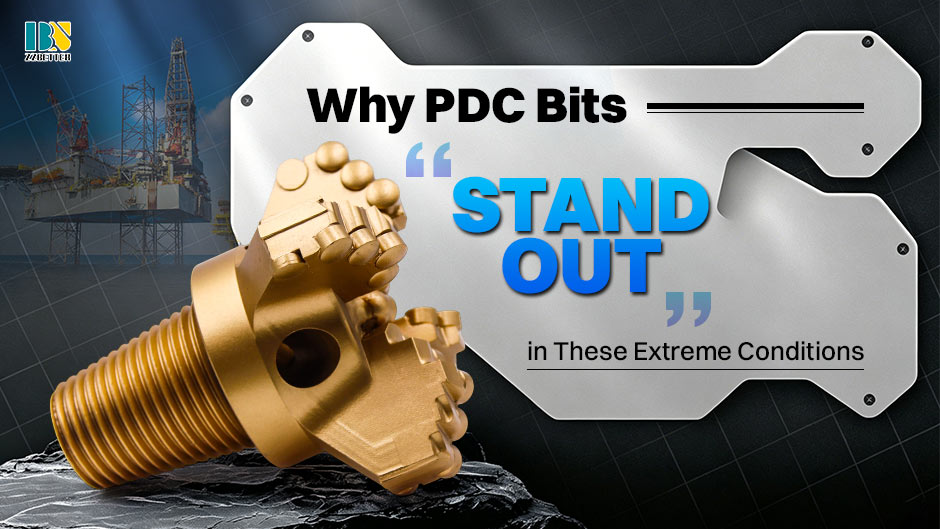
In conclusion, the superiority of a PDC drill bit is not the result of a single feature but the holistic synergy of advanced composite material science, precision mechanical engineering, and application-specific geotechnical knowledge. From the HPHT sintering process that creates the ultra-hard diamond table to the computational hydraulics that keep it cool, every detail is optimized to achieve one goal: lowering the cost per foot by maximizing rate of penetration (ROP) and total bit life. For drilling engineers and procurement specialists, understanding this intricate breakdown is key to specifying the right technology, unlocking higher efficiency, and ensuring project economics in an increasingly challenging energy landscape.
Zhuzhou Better Tungsten Carbide Compay as a PDC solution provider in this field for over 10 years, we can provide PDC cutters design, PDC bearing design, PDC bit design for our clients. Any demand for PDC just contact us freely.
Website: www.drillbetter.com
Email: PDC@drillbetter.com
Whatsapp: 008618173362360
Keywords & Long-Tail Phrases Integrated for SEO:
Polycrystalline Diamond Compact (PDC), PDC cutter, PDC drill bit, HPHT sintering, diamond table, thermal stability, thermally stable PDC (TSP), cutter impact resistance, interfacial stress, back rake angle, hydraulic efficiency, bit balling, gauge protection, formation-specific bit design, hard abrasive formations, rotary steerable systems (RSS), stick-slip vibration, smart PDC drill bit, embedded downhole sensors, drilling optimization, cost per foot, rate of penetration (ROP).