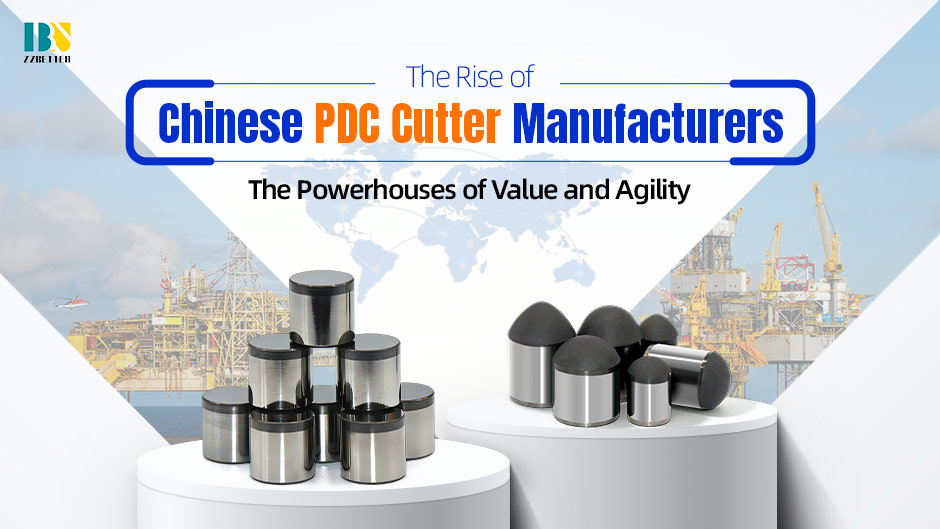
The Chinese PDC manufacturing sector has undergone a transformative evolution, emerging from a reputation as a source of low-cost alternatives to becoming formidable, technology-capable global suppliers. This analysis examines the distinct competitive advantages and the ongoing challenges faced by leading Chinese manufacturers, offering a crucial perspective for a balanced global sourcing strategy.
1.Core Strengths: Unmatched Scale, Efficiency, and Responsiveness
The most pronounced advantage of top Chinese manufacturers like Zhengzhou New Asia and SF Diamond is their unparalleled manufacturing scale and cost efficiency. They operate some of the world's largest production capacities for PDC cutters, benefiting from vertically integrated supply chains that control everything from diamond powder synthesis to tungsten carbide substrate production. This scale, combined with competitive domestic labor and operational costs, allows them to offer highly competitive pricing, creating immense pressure on the global market and enabling wider adoption of PDC technology.
Complementing this is their exceptional supply chain agility and rapid response capability. Chinese factories are renowned for their flexibility in managing customized orders, offering shorter lead times, and swiftly scaling production up or down. This makes them ideal partners for manufacturers needing to respond quickly to volatile market demands or for projects with tight timelines. Their customer-centric approach often includes a willingness to engage in Joint Design Manufacturing (JDM), adapting products to specific client requests with a speed that is difficult for Western counterparts to match.
Moreover, their strategic market diversification is a key strength. While actively competing in the global oil & gas sector, Chinese manufacturers have aggressively and successfully captured dominant shares in non-oilfield markets. They are the primary suppliers for the global mining (especially coal), construction, and geological exploration tool industries. This diversification provides a stable revenue base and drives continuous production and process innovation.
2.Persistent Challenges: The Pursuit of Consistent Premium Performance
Despite remarkable progress, challenges remain in the areas of perception, innovation depth, and market positioning. A significant hurdle is the lingering perception gap regarding consistent ultra-high-end quality. While their best products can rival mid-tier Western offerings, the industry-wide perception—fair or not—is that the absolute peak of performance, consistency, and reliability under the most extreme conditions is still held by foreign leaders. This affects their adoption in flagship, high-risk drilling projects.
Although R&D investment is growing, the focus has often been on process optimization and cost reduction rather than fundamental, breakthrough material science. The development of next-generation proprietary materials (like novel binderless nanostructures) or industry-defining product platforms more commonly originates from Western R&D labs. Some manufacturers also face the challenge of branding and value communication, sometimes competing more on specification sheets and price rather than on a well-articulated brand promise of total lifecycle value and deep technical consultancy.
3.Conclusion and Strategic Insight
Chinese PDC manufacturers represent the smart-value, agile supply choice. They are the go-to source for cost-effective, reliable solutions across a vast range of applications, particularly in mining and mainstream oilfield operations. Their rise has democratized PDC technology. For global buyers, they offer a powerful lever for cost control and supply chain flexibility. The strategic approach is to qualify and partner with the top-tier Chinese producers—those with proven quality certifications and a record of consistent export performance. The future will see the gap narrow further as these leaders continue to move up the value chain, blending their innate strengths in efficiency with growing prowess in advanced innovation.