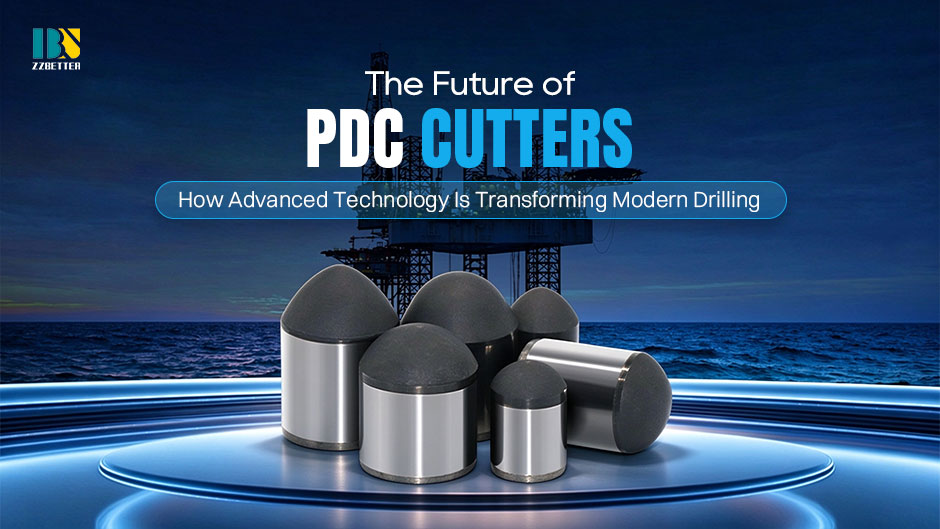
 PDC cutter technology is advancing through improvements in diamond materials, interface engineering, thermal stability, and cutting geometry. The aim is to balance wear resistance, impact resistance, and cutting efficiency for a defined application. Better drilling performance depends on integrating the cutter with bit design, hydraulics, and operating conditions.
For drilling tool manufacturers and procurement teams, the practical question is which developments address the damage and operating limitations seen in their own applications.
Why PDC Cutters Remain Important
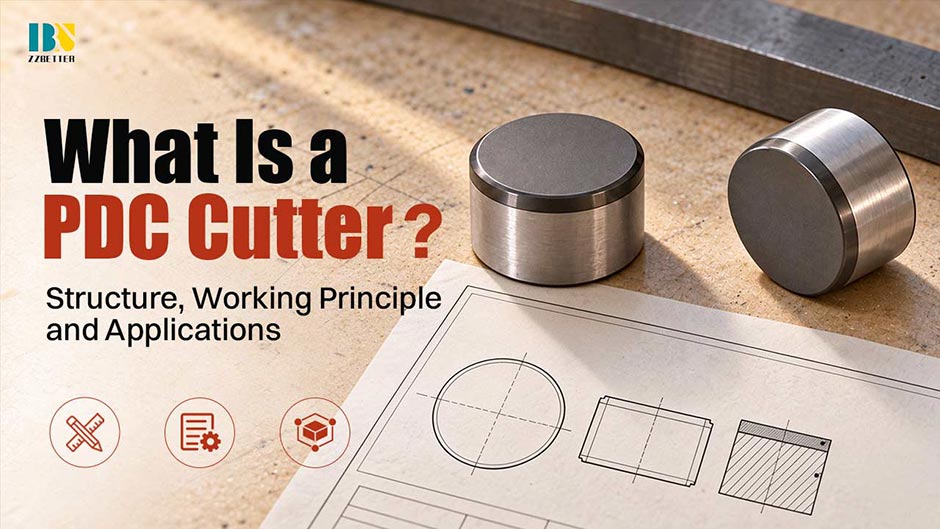
A polycrystalline diamond compact cutter combines a diamond table with a cemented tungsten carbide substrate, typically joined during high-pressure, high-temperature sintering. This structure provides a wear-resistant cutting surface supported by a substrate that can be mounted in a drilling tool.
PDC bits can deliver efficient rock cutting in suitable applications, but their performance relative to roller-cone or other bit types depends on the formation, cutting structure, hydraulics, and operating parameters. A cutter upgrade alone does not guarantee faster drilling or lower cost per meter.
Material and Interface Engineering
Development work covers diamond grain distribution, sintering conditions, diamond-table architecture, and the interface with the carbide substrate. These features should be evaluated together rather than treated as independent measures of cutter quality.
Hardness alone is an incomplete selection criterion. Buyers should ask how a proposed grade performs in relevant abrasion and impact tests, including the test conditions, comparator, and acceptance criteria. Results for one proprietary cutter should not be attributed to another supplier's product.
Thermal Stability and Heat Management
Heat generated during cutting can interact with mechanical loading and wear. A 2025 study in Geoenergy Science and Engineering developed thermal–mechanical wear models for a single PDC cutter and reported temperature-dependent wear predictions under the conditions examined. These predictions should be interpreted within the study's assumptions and conditions, not used as a universal temperature limit or field wear multiplier.
Potential design approaches include cobalt removal from part of the diamond table, changes to diamond-table architecture, and thermal-management features. The right combination requires evaluation of the complete cutter design. Greater leaching depth or diamond thickness should not, on its own, be treated as proof of better overall performance.
Cooling and cuttings removal also depend on the bit's hydraulic design and operating conditions. Material improvements and bit-level heat management must therefore be assessed together.
Shaped Cutters and Rock Interaction
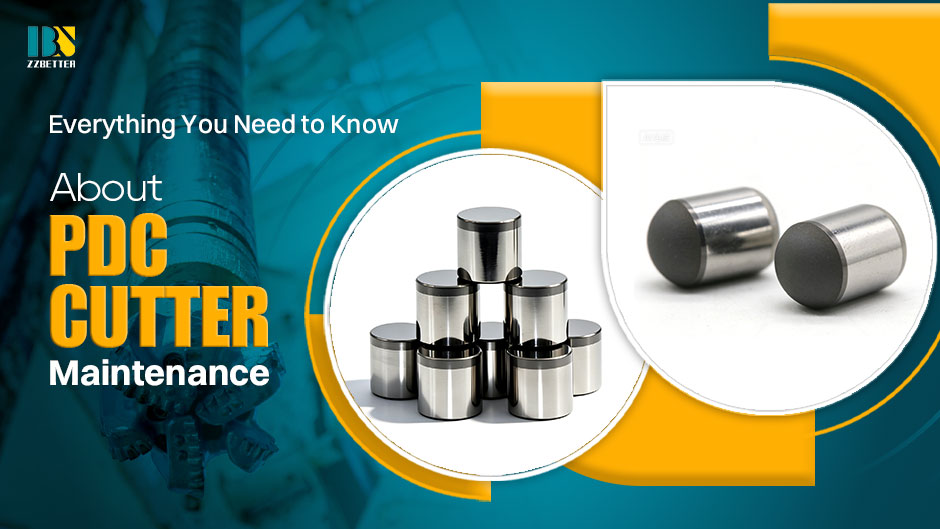
Flat, conical, ridged, and other shaped cutters engage rock differently. Geometry changes contact area, local stress distribution, and the way fractures develop. Cutter orientation and placement within the cutting structure are therefore important alongside the shape itself.
A 2026 industry announcement describes a design that combines planar and curved surfaces to manage cutting and loading. Such developments are manufacturer-reported for a proprietary product, not evidence that every shaped cutter delivers the same benefits.
For an example of a commercially available geometry category, review ridged PDC cutters and confirm the required dimensions and application before selecting a product.
What Historical Run Data Can Tell Buyers
A 2014 industry article reported that worn and chipped cutters accounted for about 60% of the dull-grade characteristics in a dataset covering more than 45,000 conventional fixed-cutter PDC bit runs. This is historical context, not a current market-wide failure rate. Nor does it establish that heat caused every reported wear or chipping event.
For a new application, review recent run records and damage patterns. Distinguish abrasion, impact, thermal effects, and mounting-related problems before deciding which cutter characteristic needs improvement.
Selecting Technology for the Application
Formation names alone are not enough for cutter selection. Sandstone, limestone, granite, and shale can differ substantially in strength, abrasivity, fractures, and interbedding.
Provide the supplier with:
- The formation and relevant rock-property information.
- The current bit design, cutter position, and dimensions.
- Operating parameters and circulation conditions.
- Photographs and descriptions of existing wear or damage.
- The target improvement, such as reduced chipping or longer usable cutting life.
Evaluate proposed cutters against comparable conditions. Useful measures include wear, damage severity, drilling rate, usable footage, and cost per meter. A higher laboratory result in one test does not establish the best overall field choice.
What to Ask a PDC Cutter Supplier
Request confirmation of dimensions, tolerances, grade identification, inspection scope, traceability, and installation requirements. Where performance advantages are claimed, ask for the supporting test method and relevant comparison.
DrillBetter supplies PDC cutters for drilling tools and industrial applications. To discuss a proposed cutter specification, contact DrillBetter with your drawing or model, dimensions, quantity, formation information, and current wear or damage findings.