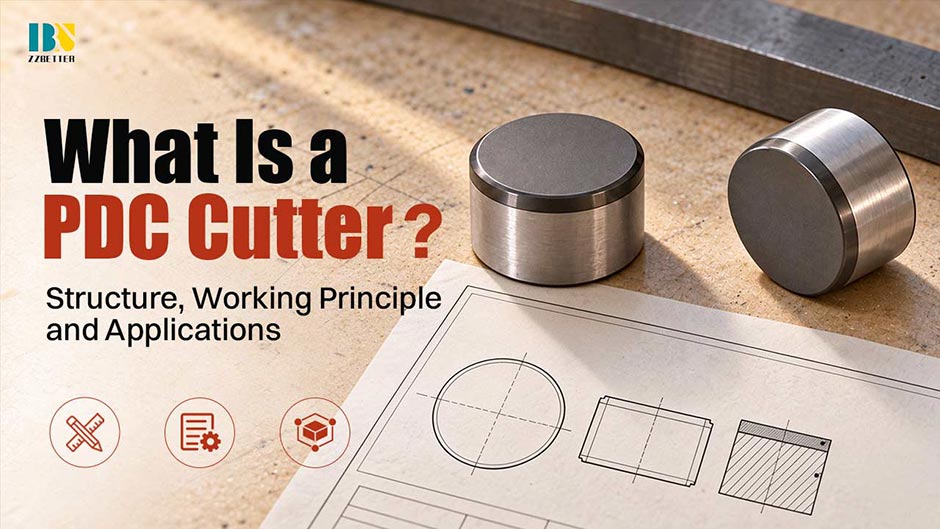
 PDC stands for polycrystalline diamond compact. A PDC cutter is a composite cutting element typically made of a polycrystalline diamond table bonded to a tungsten carbide substrate. It is used in drilling and rock-cutting tools. On many fixed-cutter drill bits, the cutting edge removes rock primarily through shearing.
What Is a PDC Cutter Made Of?
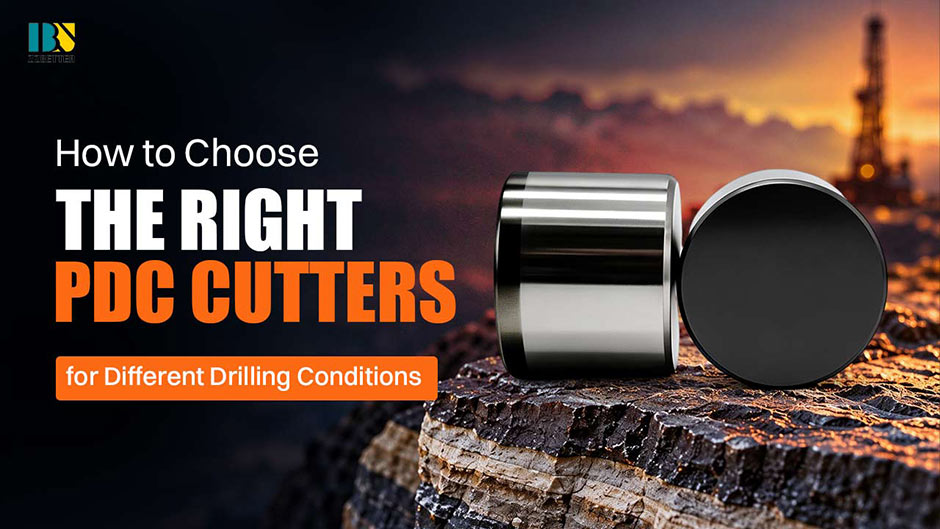
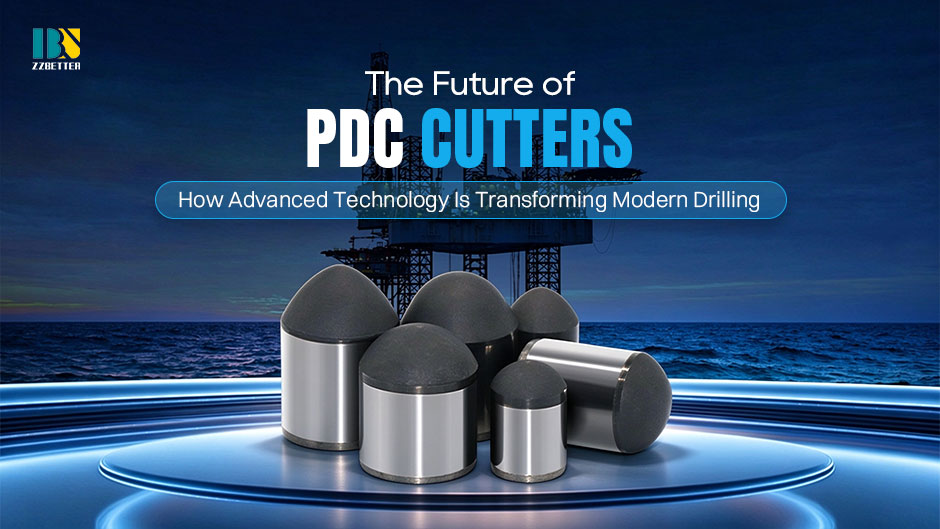
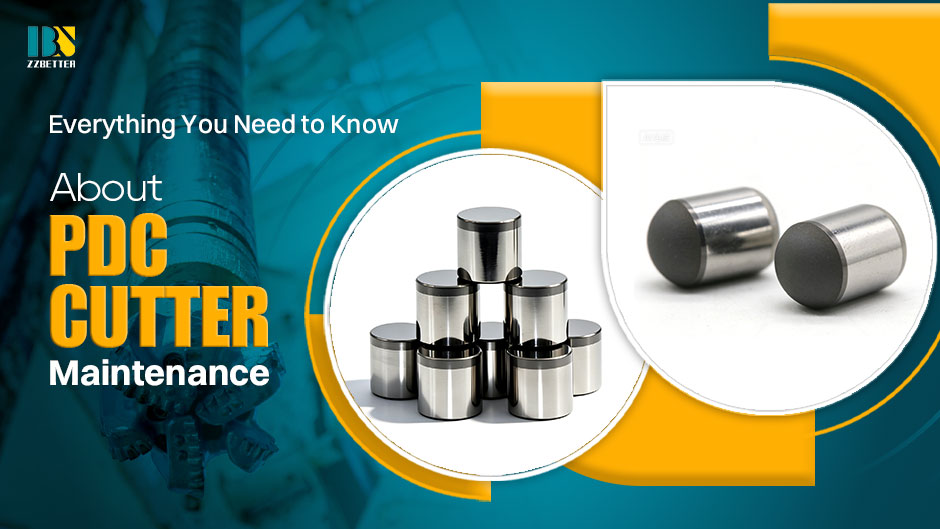
Concept illustration of PDC cutters. AI-generated image; proportions do not represent a specific product specification.
A typical PDC cutter has two main components: the diamond table and the carbide substrate.
PDC Diamond Table
The diamond table is the working surface of the cutter. It consists of synthetic diamond particles bonded together under high pressure and high temperature.
On many fixed-cutter bits, the diamond table provides a wear-resistant cutting edge that engages the formation as the bit rotates. Its performance depends on the material, geometry, operating conditions, and the complete cutter design.
Tungsten Carbide Substrate
The substrate is commonly made of cemented tungsten carbide, consisting of carbide grains and a metallic binder. It supports the diamond table and helps transfer loads into the tool body.
The diamond table and substrate work together. Both must be considered when evaluating a cutter's suitability for an application.
Explore DrillBetter's PDC flat cutters for examples of cutter sizes and product specifications.
How Are PDC Cutters Manufactured?
Conventional PDC cutters are commonly manufactured using high-pressure, high-temperature sintering, also known as HPHT sintering.
Under controlled conditions, diamond particles bond to form the diamond table, which is typically joined to the carbide substrate during the process. Pressure, temperature, materials, and processing time are controlled according to the product design.
After sintering, cutters may undergo finishing and inspection. Depending on the product, inspection may include dimensional checks, visual examination, and suitable structural or performance tests.
How Does a PDC Cutter Work?
On a fixed-cutter drill bit, flat PDC cutting edges commonly remove rock primarily by shearing as the bit rotates. Other cutter shapes and tool designs may engage rock differently, including through combined shearing, indentation, or impact-related loading.
Several factors influence cutter–rock interaction:
- Depth of cut: How deeply a cutting edge engages the formation under the relevant bit geometry and operating conditions.
- Cutter exposure and placement: How the cutter is positioned within the bit's cutting structure.
- Weight on bit and rotational speed: Operating parameters that influence loading and cutter–rock interaction.
- Formation properties: Rock strength, abrasiveness, fractures, and changes between layers.
Together, these factors influence penetration rate, cutter wear, and drilling stability.
What Are PDC Cutters Used For?
PDC cutters are used in tools for:
- Oil and gas drilling: Cutting elements may be arranged across a fixed-cutter bit body.
- Mining and geological exploration: Cutter configuration depends on the drilling method and formation.
- Water well drilling: Selected PDC cutting elements are used in tools matched to the equipment and ground conditions.
Not every PDC cutter is suitable for every tool. Shape, material grade, mounting design, and operating conditions must be considered together.
How to Select a PDC Cutter
When requesting a cutter, provide:
1. The intended application and drill bit or tool type.
2. Available formation and operating information.
2. Cutter diameter, total height, diamond table thickness, and chamfer.
3. Technical drawings, tolerances, and required quantity.
4. Relevant wear, impact, thermal, or inspection requirements.
DrillBetter supplies PDC cutters for drilling tool applications. For product information or a quotation, contact DrillBetter with your drawing, required dimensions, quantity, and application details.