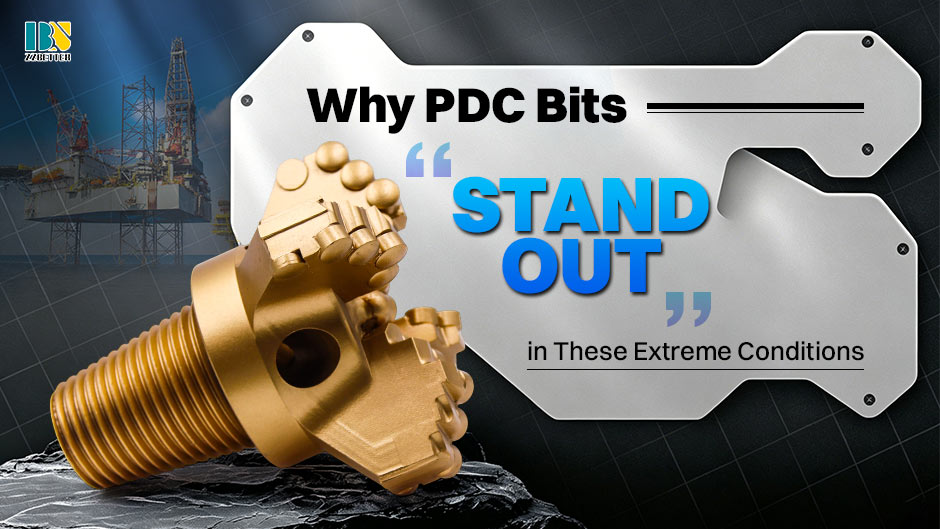
If you drill hard rock for a living, you already know the frustration. You put a new PDC bit downhole, and within a few meters, the cutters are chipped, the diamond table is gone, and you're pulling a dull bit that looks like it lost a fight with a grinder.
Most people assume PDC cutters don't work in hard rock. That's not entirely true. They work, but only if you understand what actually kills them down there—and how to pick the right cutter for the job.
Why Normal PDC Cutters Die Fast in Hard Rock
Hard rock isn't like shale or sandstone. It doesn't shear cleanly. It fractures randomly, and those fractures send shock loads straight into your cutters.
Here's what usually happens:
- First, impact chipping. The sharp edge of a brand new cutter hits a hard, uneven surface—like granite or quartzite—and a tiny piece of the diamond layer breaks off. Once that edge is gone, the carbide underneath gets exposed and wears down fast.
- Second, heat. In hard rock, friction can push cutter temperatures past 700°C. At that heat, the diamond starts turning back into graphite. It's a chemical change you can't stop once it starts. The cutter gets soft, and then it's gone.
- Third, delamination. The diamond layer separates from the tungsten carbide base. This happens when the cutter vibrates too much. In hard rock, vibration is almost guaranteed unless your drilling parameters are dialed in perfectly.
So the real problem isn't that diamond is too soft for hard rock. It's that normal cutters lack impact strength and thermal stability.
What a Good Hard Rock Cutter Looks Like
Not all PDC cutters are the same. If you want to survive hard rock, look for these features.
Non-planar interface. That's a fancy way of saying the diamond and carbide are locked together like puzzle pieces, not glued flat. This stops delamination when the torque spikes.
1.Leached diamond table. Leaching removes cobalt from the diamond layer. Cobalt is the enemy when things get hot. Without it, the cutter can handle much higher temperatures before breaking down. A non-leached cutter is a waste of money in hard rock.
2.Chamfered edge. A flat, sharp cutter will chip instantly. A chamfer—a bevel ground into the edge—spreads the impact over a wider area. For hard rock, you want a 45-degree chamfer, at least 0.3mm wide.
3.Thinner diamond layer. This sounds wrong, but a 1.5mm to 2.0mm diamond table actually survives longer than a thick one. Thin layers have less internal stress, so they crack less.
Cutter Shapes That Actually Work in Hard Rock
Round cutters are fine for soft rock. In hard rock, you need better geometry.
Negative chamfer – Already mentioned, but it's so important I'll say it again. No chamfer, no survival.
Oval cutters – These have a longer contact area, which reduces peak stress on any single point. They let you run higher weight without stalling.
Axial or stinger shapes – Some newer cutters use a pointed or ridged geometry. Instead of shearing the rock, they crush it. This works better in extremely hard, brittle formations.
How to Run a PDC Bit in Hard Rock
Your drilling parameters matter as much as the cutter itself. I've seen great cutters fail because the driller ran them like they were in sandstone.
Here's the rule: low RPM, high torque.
Parameter | Soft Rock | Hard Rock |
RPM | 200–350 | 80–120 |
Weight on bit | Light (10–20 klbs) | Heavy (25–45 klbs) |
Torque | Low | High, near stall |
ROP | Fast | Slow, but steady |
The biggest mistake people make is spinning the bit too fast. High RPM creates more heat and more vibration. In hard rock, slow and heavy wins every time.
Also, watch your standpipe pressure. If you see a sudden drop while drilling hard rock, that usually means you lost a cutter. The bit is now drilling on the carbide, and you need to trip out before you damage the whole bit.
PDC vs. Roller Cone: Which One Wins?
Let's be honest. In very hard, fractured rock, a good roller cone bit will still outlast a PDC. But PDC drills faster when conditions are right.
Use PDC when:
• The formation is relatively uniform (no big changes every meter)
• Compressive strength is 20,000–35,000 psi
• You have vibration monitoring on your rig
Use roller cone when:
• The rock is highly fractured or full of pebbles
• Compressive strength is over 40,000 psi
• You keep losing PDC cutters on the first run
Some operators are now running hybrid bits (roller cone + PDC together). They are expensive, but in the right formation, they solve the problem completely.
Three Practical Tips to Make Your Cutters Last
1. Break them in slowly. Run the new bit at low RPM (around 50) for the first two meters when you hit hard rock. This lets the chamfer wear in and creates a small flat spot that reduces stress later.
2. Don't ignore vibration. If your rig is shaking, your cutters are dying. Add stabilizers. Shorten the bit gauge. Do whatever it takes to stop lateral movement.
3. Cool the cutters. In hard rock, you need enough flow to keep things under 700°C. If your flow rate is too low, you won't see the heat damage until it's too late.
PDC cutters can drill hard rock. But you can't treat them like soft rock tools. You need the right geometry (chamfered, leached), the right shape (non-planar interface), and the right drilling parameters (low RPM, high torque).
If you try to cut corners on cutter quality or run the bit too fast, you'll pull out a wrecked bit and wish you had just run a roller cone.
But if you do it right, you'll drill faster, pull fewer trips, and save real money over the life of the well.