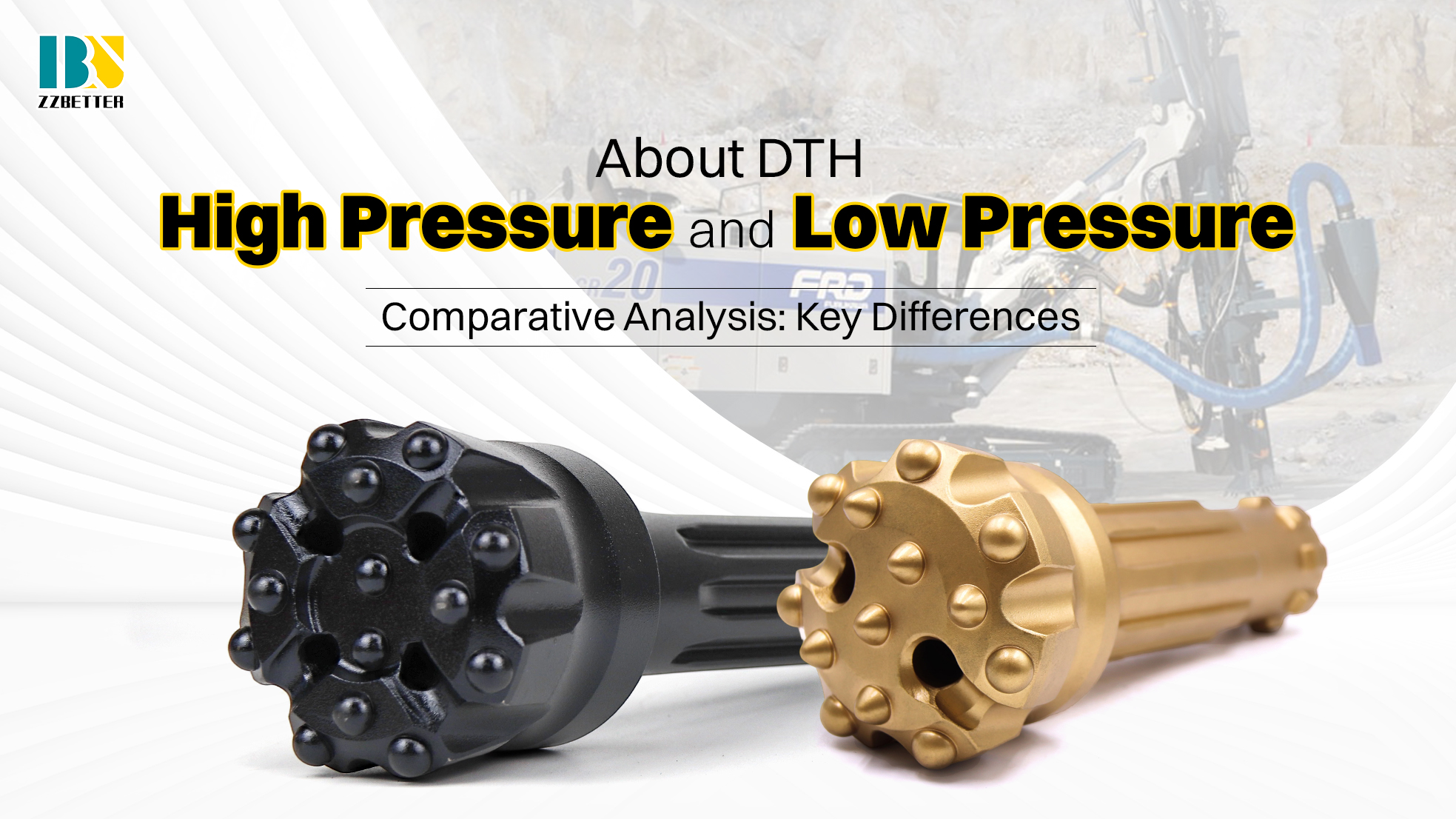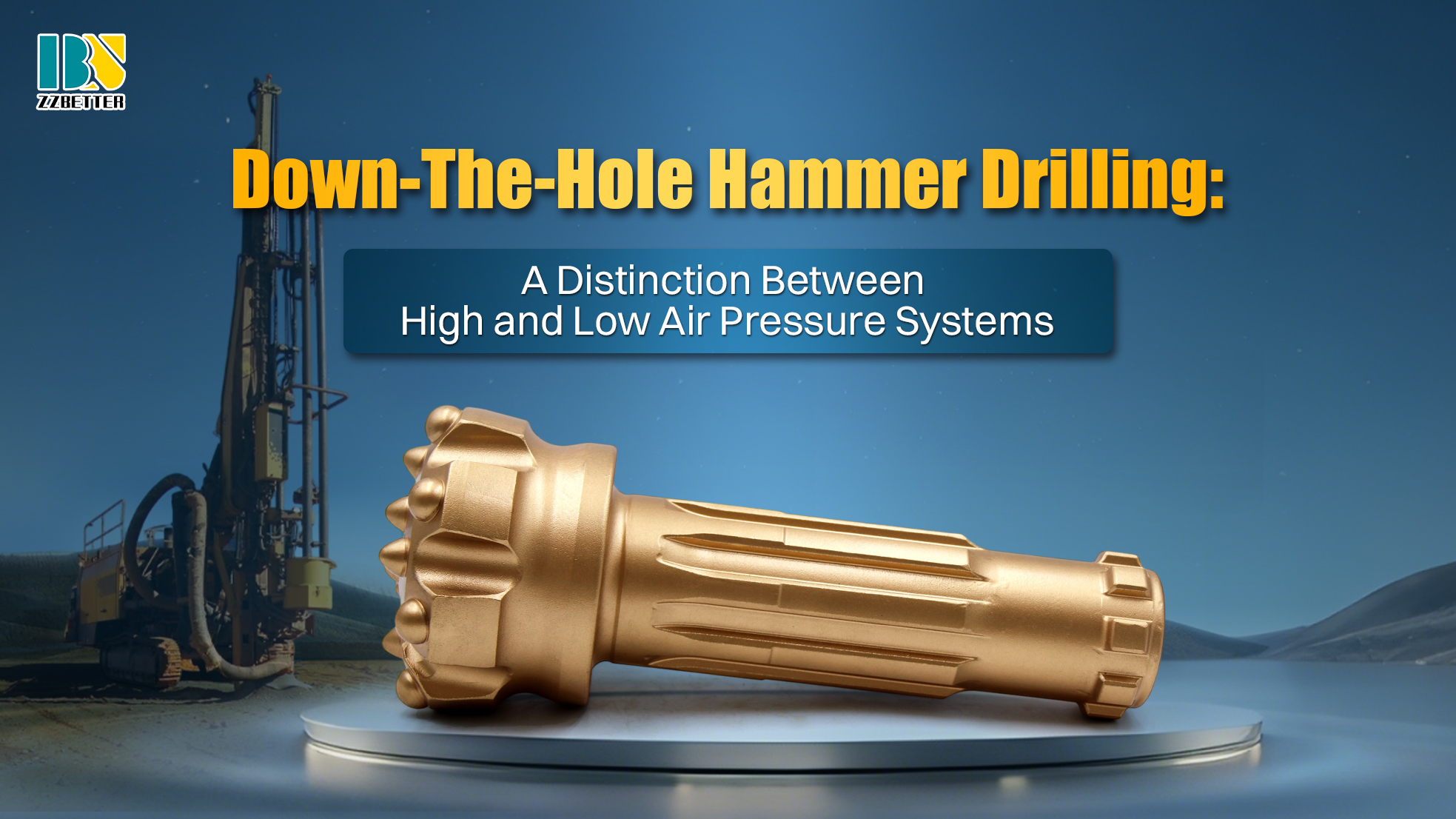
Down-The-Hole (DTH) hammer drilling is a highly efficient percussion drilling technology renowned for its speed, precision, and ability to penetrate hard rock formations. At the heart of this technology lies the DTH hammer, which operates on compressed air. A critical distinction within this field is the classification into High-Pressure and Low/Medium-Pressure DTH systems. Understanding this distinction is paramount for selecting the right equipment to maximize productivity, control costs, and ensure project success in various applications, from mining to civil engineering.
Fundamental Working Principle of a DTH System
A DTH system consists of a pneumatic hammer connected to the bottom of a drill string. Unlike top-hammer drills where the energy is transmitted through the rods, the DTH hammer is located directly behind the drill bit. Compressed air, pumped down the drill string, powers a piston inside the hammer. This piston strikes the drill bit at a high frequency, transmitting impact energy directly into the rock. The same air stream serves a dual purpose: it actuates the hammer mechanism and flushes the crushed rock cuttings (the "muck") back to the surface through the annulus between the drill string and the borehole wall. This direct energy transfer results in superior efficiency, especially in deep, hard rock drilling.
Low/Medium-Pressure DTH Systems
Low/Medium-Pressure DTH systems are designed to operate with compressed air typically in the range of 100 to 250 psi (7 to 17 bar). They are characterized by their robust but relatively simpler internal design. These systems are often the workhorses for standard applications where extreme rock hardness is not the primary challenge.
Typical Hammer Models: CIR65, CIR70, CIR90, CIR110, CIR150, CIR200.
Typical Bit Sizes (mm): 80, 90, 100, 110, 120, 130, 140, 150, 180, 185, 200, 220.
Key Features: They generally have a lower initial investment cost and are compatible with standard, widely available air compressors. Their design prioritizes reliability and ease of maintenance in less demanding environments.
Applications:
Low/Medium-Pressure DTH systems are incredibly versatile and find widespread use in:
Water Well Drilling: For constructing water wells in moderately hard aquifers.
Geotechnical Engineering: Drilling for soil nailing, anchor bolts, and foundation pilings.
Blast Hole Drilling in Soft to Medium Rock: Used in quarries and smaller mining operations for limestone, sandstone, and other non-abrasive formations.
Construction Projects: For tasks like micropiling and preliminary ground investigation.
High-Pressure DTH Systems
High-Pressure DTH systems are engineered for performance and durability under extreme conditions. They operate at significantly higher air pressures, usually between 250 and 350 psi (17 to 24 bar) or even higher. This high-pressure air delivers more powerful piston blows, resulting in a much greater impact energy per strike.
Typical Hammer Models: DHD340, DHD350, DHD360, DHD380, N125, SD12.
Typical Bit Sizes (mm): 115, 127, 138, 152, 165, 178, 195, 203, 216, 240, 254, 304.
Key Features: These hammers and bits are built with superior materials and advanced machining techniques to withstand the immense stresses. They feature more complex internal valving to efficiently manage the high-pressure air. The primary benefits are dramatically increased Penetration Rates and the ability to drill efficiently in the hardest, most abrasive rock formations.
Applications:
High-Pressure DTH is the technology of choice for heavy-duty, high-productivity operations:
Large-Scale Mining: Drilling large-diameter blast holes in hard rock mines (e.g., iron ore, copper porphyry).
Tunnel Boring and Shaft Sinking: For precise and rapid advancement in major underground construction projects.
Deep Foundation Piling: Where large diameter piles must be socketed into very hard bedrock.
Exploratory Drilling: For mineral exploration in deep, hard rock environments.