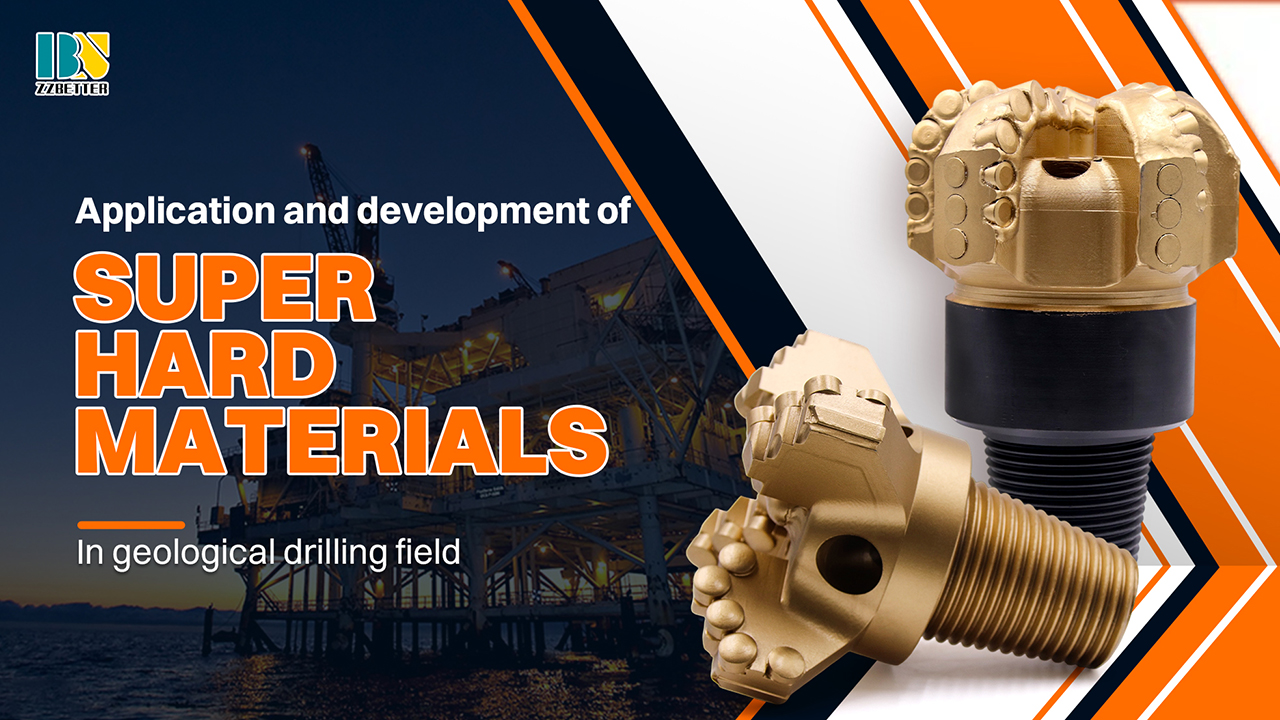
In the context of drilling, super-hard materials are those with extreme hardness, high wear resistance, and sufficient toughness to withstand the brutal conditions of crushing and shearing rock. The primary materials are:
1.Diamond:
▶▷Natural Diamond: The hardest known natural material. Historically, whole natural diamonds were set in drill bits for the hardest formations.
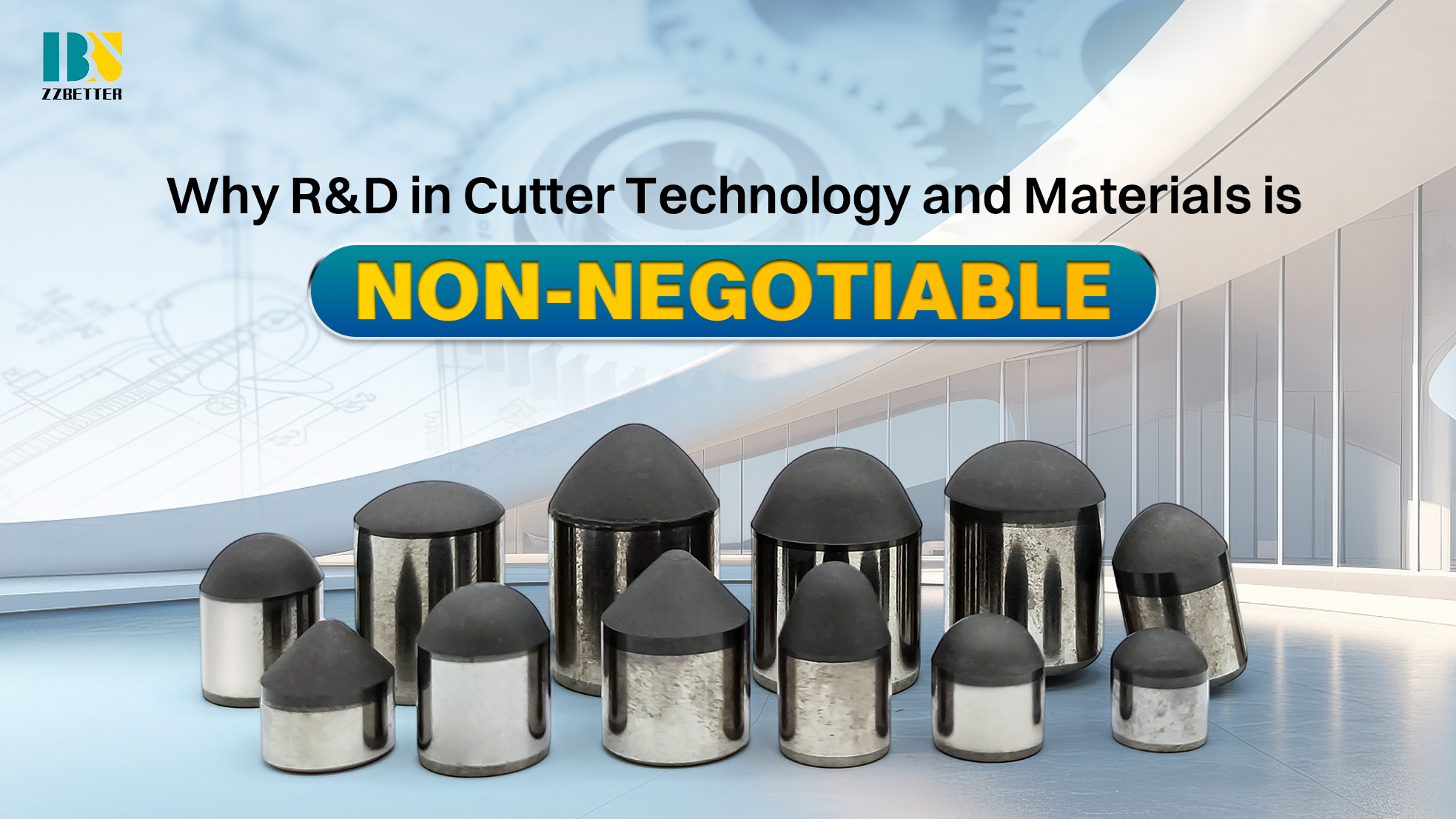
▶▷Polycrystalline Diamond (PCD): A synthetic material comprising a layer of randomly oriented micrometer-sized diamond grains sintered together. This polycrystalline structure gives it exceptional toughness compared to a single crystal, as it doesn't have a single cleavage plane.
▶▷Polycrystalline Diamond Compact (PDC): The most important innovation. A PDC is a composite material where a layer of PCD is bonded to a tungsten carbide substrate. This combines the extreme hardness and abrasion resistance of diamond with the mechanical strength and impact resistance of carbide.
2.Cubic Boron Nitride (CBN): The second-hardest known material, synthesized to rival diamond. While not as hard as diamond, it has a key advantage: exceptional chemical inertness at high temperatures, especially with ferrous metals. Diamond dissolves in iron at high temperatures, making it unsuitable for drilling steel-casing or certain iron-rich rocks. CBN does not.
Applications in Geological Drilling
The primary application of these materials is in the cutting structure of drill bits.
1. PDC Bits (Polycrystalline Diamond Compact Bits)
This is the dominant application that has transformed the industry.
● How They Work: A PDC bit has dozens to hundreds of PDC cutters brazed onto a bit body (usually steel or matrix-bodied with tungsten carbide). As the bit rotates, these cutters shear the rock in a continuous scraping action, which is far more efficient than the crushing/chipping action of roller cone bits.
● Advantages:
▶▷High Rate of Penetration (ROP): Shearing rock is faster than crushing it, leading to significantly faster drilling and reduced project time and cost.
▶▷Longer Bit Life: Extreme wear resistance allows a single PDC bit to drill thousands of meters, often replacing multiple traditional bits in a single run.
▶▷Smooth Borehole: The shearing action produces a cleaner, more gauge-stable borehole.
▶▷Cost-Effectiveness: While individual bits are expensive, the reduction in the total number of bits and tripping time (pulling the drill string to change the bit) results in massive overall cost savings.
▶▷Geological Formations: Initially best for soft to medium-strength, non-abrasive sedimentary rocks (shales, mudstones, salts). Continuous development has expanded their use into harder, more abrasive, and interbedded formations.
2. Diamond Impregnated Bits
For the very hardest and most abrasive formations (e.g., quartzite, chert, granite, basalt).
● How They Work: These bits have a matrix (usually tungsten carbide) that is "impregnated" with fine, synthetic diamond crystals. As the bit grinds against the rock, the soft metal matrix wears down slightly, constantly exposing fresh, sharp diamond particles. It's a continuous self-sharpening process.
● Advantages:
▶▷Unmatched Abrasion Resistance: The only choice for drilling through extremely abrasive formations where other bits would be destroyed in minutes.
▶▷Ability to Drill Hard Rock: Essential for deep geological research drilling, geothermal drilling, and mining where crystalline basement rock is encountered.
▶▷Geological Formations: Hard, abrasive, and crystalline rocks. Widely used in Mineral Exploration, Geothermal Drilling, and Scientific Drilling (e.g., the International Continental Scientific Drilling Program).
3. Core Bits with Super-Hard Materials
In coring operations, the goal is to retrieve a continuous cylindrical sample of the subsurface rock.
● PDC Core Bits: Used for faster coring in sedimentary formations for oil and gas exploration.
● Diamond Impregnated Core Bits: The standard for hard rock coring in mineral exploration and scientific drilling. They provide high-quality, undisturbed core samples from the most challenging environments.
Ongoing Development and Future Trends
The development of super-hard materials for drilling is a highly active field, driven by the need to drill deeper, faster, and in more complex geological environments.
1.Advanced PDC Cutter Technology:
▶▷Thermally Stable PDC (TS-PDC): Standard PDC begins to graphitize (break down) at around 750°C. TS-PDC is treated to leach out the cobalt catalyst, raising the thermal stability threshold to over 1200°C, significantly enhancing performance in high-heat applications.
▶▷Non-Planner Interface Geometry: Innovations in the interface between the diamond table and the substrate (e.g., conical, ridged) to improve bond strength and reduce delamination under high impact loads.
2.Expansion into New Frontiers:
▶▷Geothermal Energy: Enhanced Geothermal Systems (EGS) require drilling into hot, hard, and abrasive crystalline rock. The development of more durable and thermally stable PDC and impregnated bits is critical for making EGS economically viable.
▶▷Deep Earth Scientific Drilling: Projects aimed at sampling the Earth's mantle push the limits of material science, requiring bits that can withstand extreme temperatures and pressures.
The application of super-hard materials, particularly synthetic diamond in the form of PDC, has been a cornerstone of modern drilling technology. It has dramatically improved efficiency, reduced costs, and expanded the feasible horizons for resource extraction and scientific discovery. The ongoing development of these materials—focused on enhancing thermal stability, toughness, and adaptability—continues to push the boundaries of what is possible in geological drilling, enabling us to probe deeper into the Earth and unlock new energy sources and scientific understanding.