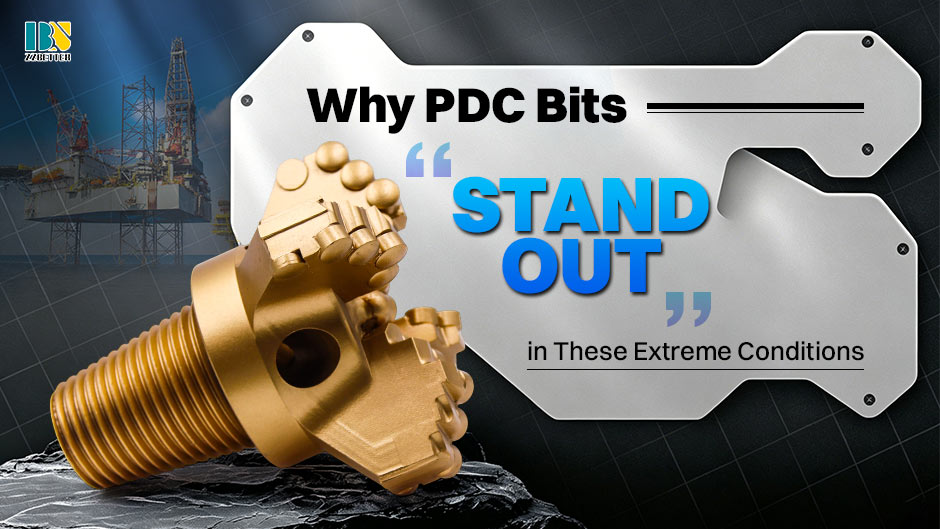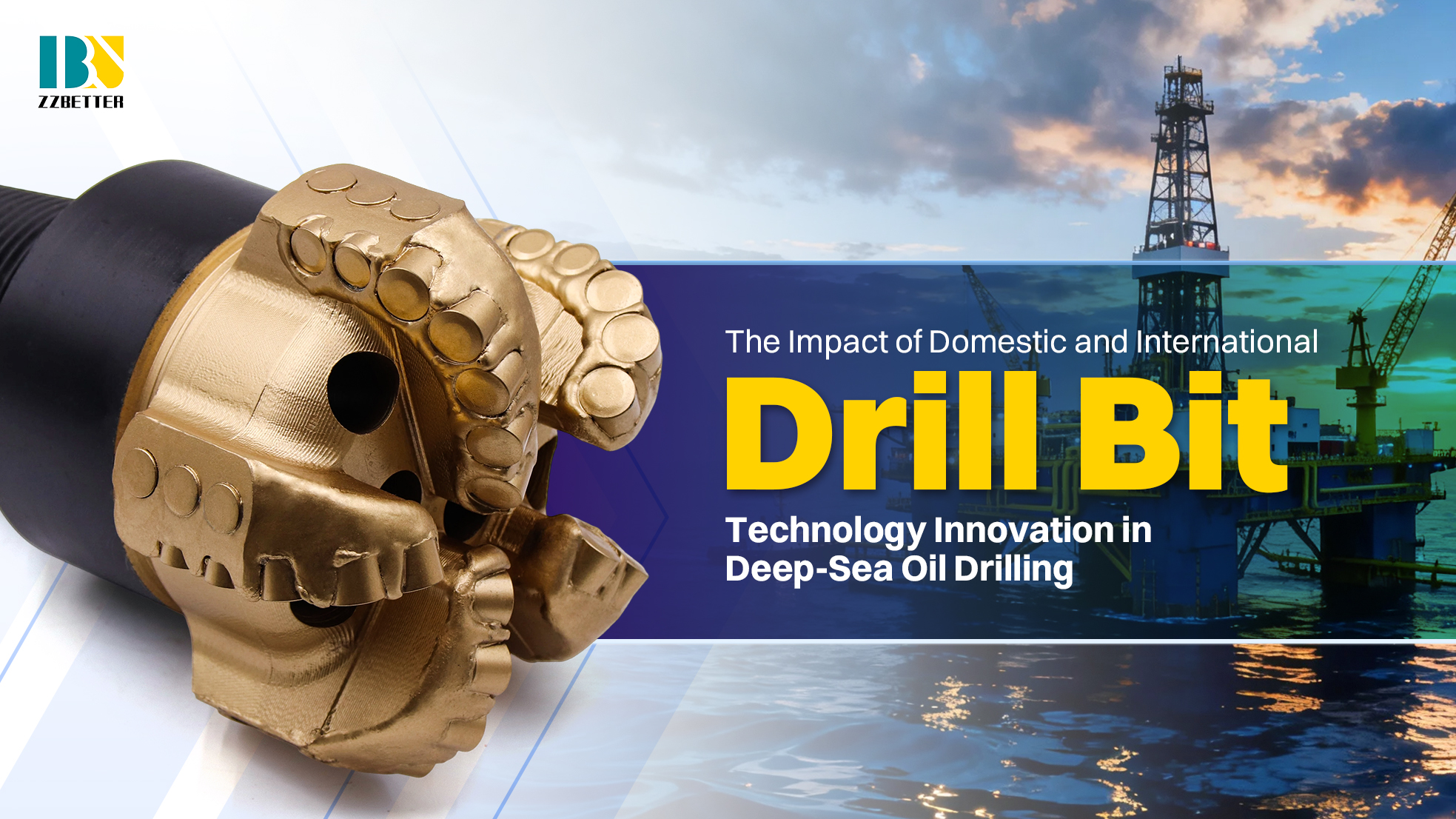
Innovation in drill bit technology, both domestically and internationally, is a key driver for increasing the rate of penetration (ROP) and efficiency in deep-sea oil drilling.
1.Core Directions of Technological Innovation
Recent innovations in drill bit technology primarily focus on the following areas to address challenges in deep-sea drilling, such as high temperature, high pressure, high abrasiveness, and geological uncertainty.
1.1 Customized Design and Digital Simulation
• Core Technology: Moving away from traditional "one-size-fits-all" designs, 3D modeling, Finite Element Analysis (FEA), Computational Fluid Dynamics (CFD), and other digital tools are used for "tailor-made" customized designs for specific formations (e.g., hard granite in the South China Sea, interbedded soft and hard formations in the Bohai Bay).
• Specific Manifestations: Optimizing cutter layout, blade shape, flow channel structure, and hydraulic parameters enables the bit to achieve the highest ROP and longest service life in specific formations.
1.2 Revolutionary Advances in Cutter Technology
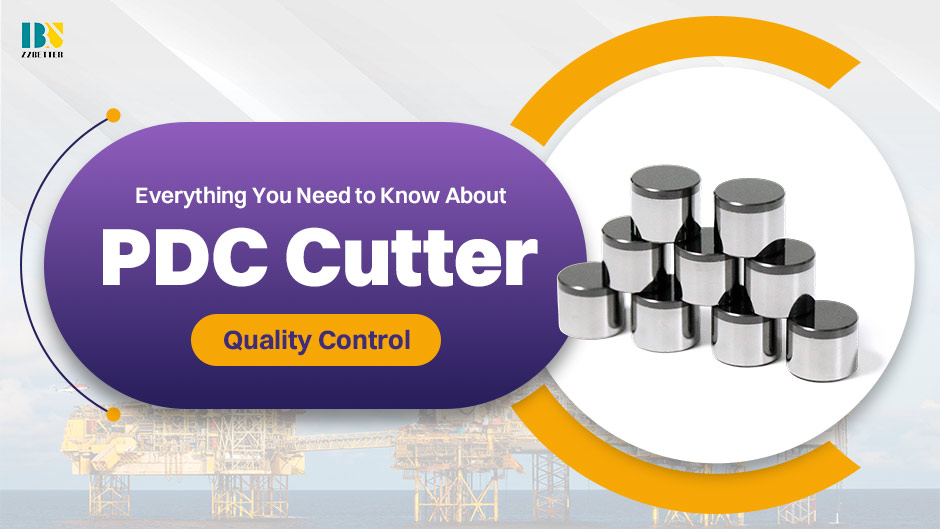
Evolution of Polycrystalline Diamond Compact (PDC) Cutters:
• Super-Hard, Wear-Resistant Layers: Using coarser diamond grains or adding special binders significantly enhances cutter wear and impact resistance.
• Non-Planar/Shape-Optimized Cutters: Developing cutters of various shapes like deep parabolic, conical, and ax-shaped for different cutting and impact resistance scenarios. For instance, ax-shaped cutters are particularly effective in breaking hard stringers.
• Special Geometry Cutters: Cutters with specific patterns or grooves on the face can create secondary cutting effects, improving rock-breaking efficiency, especially in soft to medium-hard formations.
• Diamond-Enhanced Inserts (DEI): Embedding small pieces of synthetic diamond into the tungsten carbide substrate of a PDC cutter further improves impact resistance and thermal stability.
• Thermally Stable Polycrystalline (TSP) Diamond Bits: Offer better high-temperature tolerance (up to 1200°C) and perform excellently in highly abrasive deep formations.
2. Comparison of Domestic and International Technological Development
2.1 International Leading Level (Represented by Schlumberger, Baker Hughes, Halliburton, etc.)
Advantages:
• Technology Leadership: Hold an absolute leading position in new cutter materials, intelligent bits, and digital design platforms. Examples include Schlumberger's Sting Blade (conical element bit) and Baker Hughes' Kymera (hybrid bit combining PDC and roller cone advantages).
• Integrated Solutions: Provide not just bits, but full-scale engineering services from geological modeling, pre-drill simulation, to real-time optimization and post-drill analysis, achieving optimal "Bit-Formation-Drilling Parameters" matching.
• Vast Database & Experience: Possess unparalleled data support from drilling operations in almost all major basins worldwide, fueling their customized designs.
• Application Impact: In global deep-water blocks like the Gulf of Mexico, Brazil's pre-salt, and West Africa, the bit technology from international service companies is key to achieving drilling records (e.g., in ROP, single-run footage).
2.2 Domestic Catch-up and Breakthroughs (Represented by Sinopec Oilfield Equipment Corp., Baoji Oilfield Machinery, etc.)
Progress & Advantages:
• Import Substitution: In the conventional PDC bit sector, domestic bits can largely meet the drilling needs in most of China's offshore areas (e.g., Bohai Sea, East China Sea), offering high cost-effectiveness and rapid service response.
• Targeted Innovation: Developed a series of proprietary customized bits addressing the particularly complex geological conditions of China's offshore areas (e.g., high temperature & high pressure in the South China Sea, large formation dip angles, variable lithology), solving many challenging downhole problems.
• Driven by National Strategy: Supported by national science and technology major projects under strategies like "Marine Power" and "Ensuring National Energy Security," concentrated efforts are making rapid progress in deep and ultra-deepwater bit technology.
3. Specific Impact on Deep-Sea Oil Drilling
The impact of drill bit technology innovation on ROP improvement is direct and significant, mainly reflected in the following areas:
3.1 Significantly Increases Mechanical ROP
Custom-designed PDC bits, by optimizing the cutting structure, can achieve greater "depth of cut" under the same WOB, directly increasing penetration rates. New shaped cutters and deep parabolic cutters effectively reduce "bit bouncing" and maintain efficient cutting.
3.2 Dramatically Increases Footage per Run
More wear-resistant cutters and longer-lasting bearings enable a single bit to drill longer sections, especially in highly abrasive deep formations. This directly reduces the number of trips. Given the high daily cost of offshore drilling rigs, saving one day can mean saving millions of dollars.
3.3 Effectively Handles Complex Formations, Reduces Non-Productive Time (NPT)
In interbedded soft/hard formations or those with numerous stringers, traditional bits are prone to severe vibrations, leading to premature bit damage, tool failure, or even stuck pipe. New anti-whirl/anti-impact bits and adaptive designs can smoothly navigate these formations, significantly improving operational safety and reducing downtime caused by down hole complications.
3.4 Expands Drilling Capability Boundaries
Former "no-go zones" that were uneconomical to drill due to technical limitations (e.g., ultra-deep reservoirs beyond 4500 meters, formations with pressure coefficients exceeding 2.0) are now accessible using cutting-edge bits resistant to high temperature, high pressure, and high impact. This directly expands the scope of offshore oil exploration and development.
3.5 Optimizes Overall Drilling Economics
Although the initial procurement cost of high-end bits is higher, the combined benefits of increased ROP, reduced trips, and lower risks lead to a significant reduction in cost per meter drilled. This is the fundamental value proposition of technological innovation.