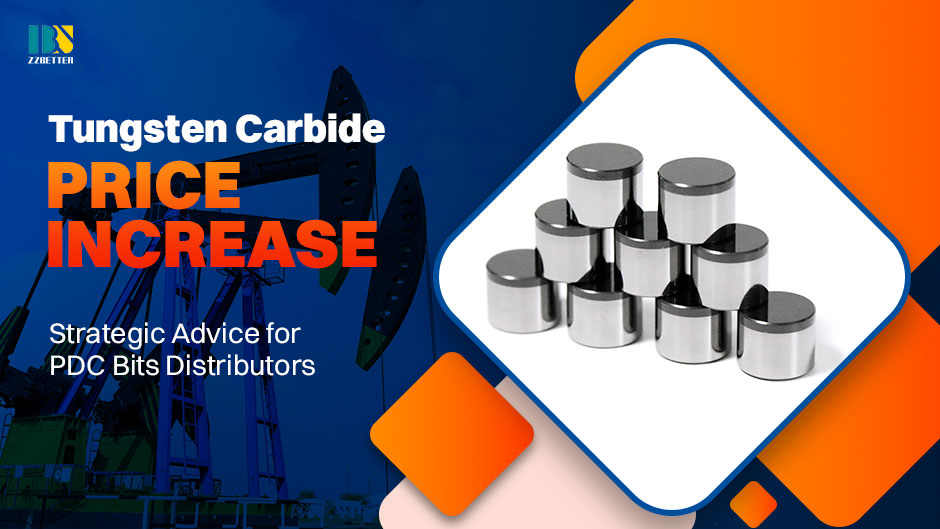
PDC bit manufacturers are currently operating in a high-pressure environment defined by a severe margin squeeze. A primary source of this pressure is the increase in global tungsten carbide powder prices. As a fundamental raw material for the bit body, this price volatility directly increases the PDC bit manufacturing cost. Simultaneously, manufacturers face rising expenses for energy, logistics, and the synthetic diamonds used in PDC cutter raw materials.
This inflationary push from the supply side collides with persistent pressure from the demand side, where drilling contractors and operators, under their own budget constraints, demand competitive drilling tool prices. This puts immense pressure on the profitability of PDC bit manufacturing. To navigate this, leading manufacturers are focusing intensely on operational efficiency in bit manufacturing and, more importantly, on developing high-value PDC bits that deliver a demonstrably lower cost per foot for the customer.
For the buyer, this economic reality underscores the critical importance of evaluating total cost of ownership over initial purchase price. A slightly more expensive bit that lasts twice as long and drills faster provides far greater value than a cheap bit that fails prematurely. The hint is that procurement decisions must be based on a comprehensive value analysis. The most reliable manufacturing partners will be those who can transparently articulate the performance advantages of their products and prove that their solution delivers the lowest overall well construction cost, even at a higher initial price point.
Geopolitical tensions and trade policies have become significant factors influencing the global PDC bit supply chain. The imposition of U.S. tariffs on Chinese goods has served as a stark reminder of the vulnerabilities inherent in a concentrated supply chain. In the short term, these tariffs on drill bits increase costs for U.S. operators and cause supply chain disruptions. In the long term, they are catalyzing a structural shift, prompting a global search for alternative sources for PDC materials and new manufacturing hubs for drill bits in regions like Southeast Asia and India.
This trend towards geographic diversification is a strategic imperative for building a resilient PDC bit strategy. Companies can no longer afford to have all their production or sourcing tied to a single geographic region. This applies not only to finished bits but also to the raw materials, such as tungsten and diamond raw materials, that go into them. The industry is being pushed to redraw its global manufacturing map to enhance security and mitigate the impact of tariffs.
The key lesson for both suppliers and operators is to proactively manage geopolitical risk. For operators, this means diversifying their supplier base and considering regional sourcing options. For manufacturers, it involves building flexible, multi-location production capabilities. The companies that thrive in the coming decade will be those that have successfully built robust, distributed supply chains that can withstand political and trade-related shocks, ensuring an uninterrupted flow of critical drilling technology.