In the demanding and costly environment of offshore drilling, Polycrystalline Diamond Compact (PDC) cutters have become the cornerstone of efficient and reliable rock destruction. Understanding their application is key to optimizing performance and economics at sea.
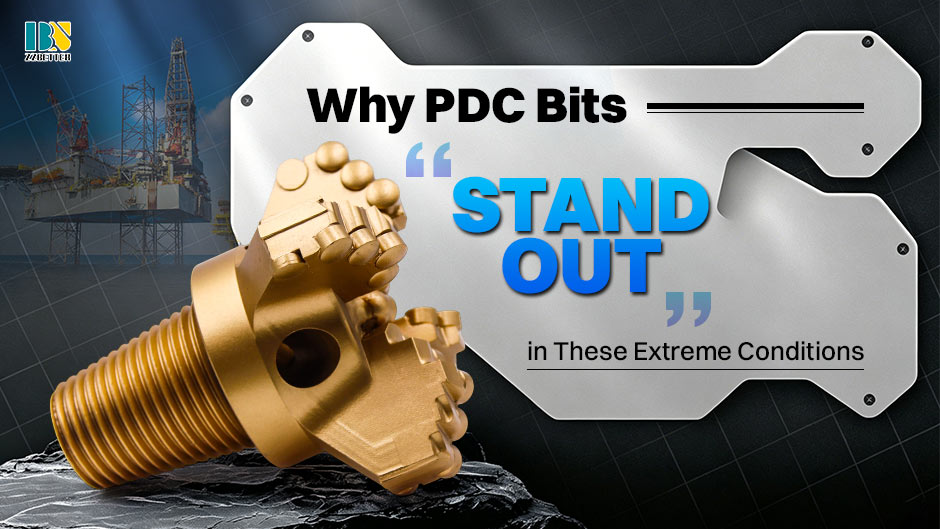
A PDC cutter is a synthetic diamond table bonded to a tungsten carbide substrate. This combination creates an incredibly hard, sharp, and thermally stable cutting edge. Unlike traditional roller cone bits that crush rock, PDC bits, studded with hundreds of these cutters, shear rock with continuous scraping action. This leads to faster drilling, longer bit life, and smoother boreholes—critical advantages when daily rig costs run into the hundreds of thousands.
The offshore application leverages these strengths in several ways. PDC bits excel in the soft to medium-hard, uniform sedimentary formations commonly encountered in offshore basins, such as shale, clay, and salt. Their efficiency dramatically reduces the time to reach target depth, minimizing weather window risks and overall project cost. Furthermore, their durability often allows a single PDC bit to drill an entire section, eliminating time-consuming bit trips—a major benefit in deepwater operations.
The main sizes:
Model. | Diameter | Height | Thickness |
1308 | 13.44 | 8 | M:2.2 |
1313 | 13.44 | 13.2 | |
1608 | 15.88/16.05 | 8 | |
1610 | 15.88/16.05 | 10 | |
1613 | 15.88/16.05 | 13.2 | |
1616 | 15.88/16.05 | 13.2 | |
1908 | 19.05 | 8 | |
1913 | 19.05 | 13.2 | |
1916 | 19.05 | 16 | |
1919 | 19.05 | 19.05 | |
Customized sizes according to customer needs are available | |||
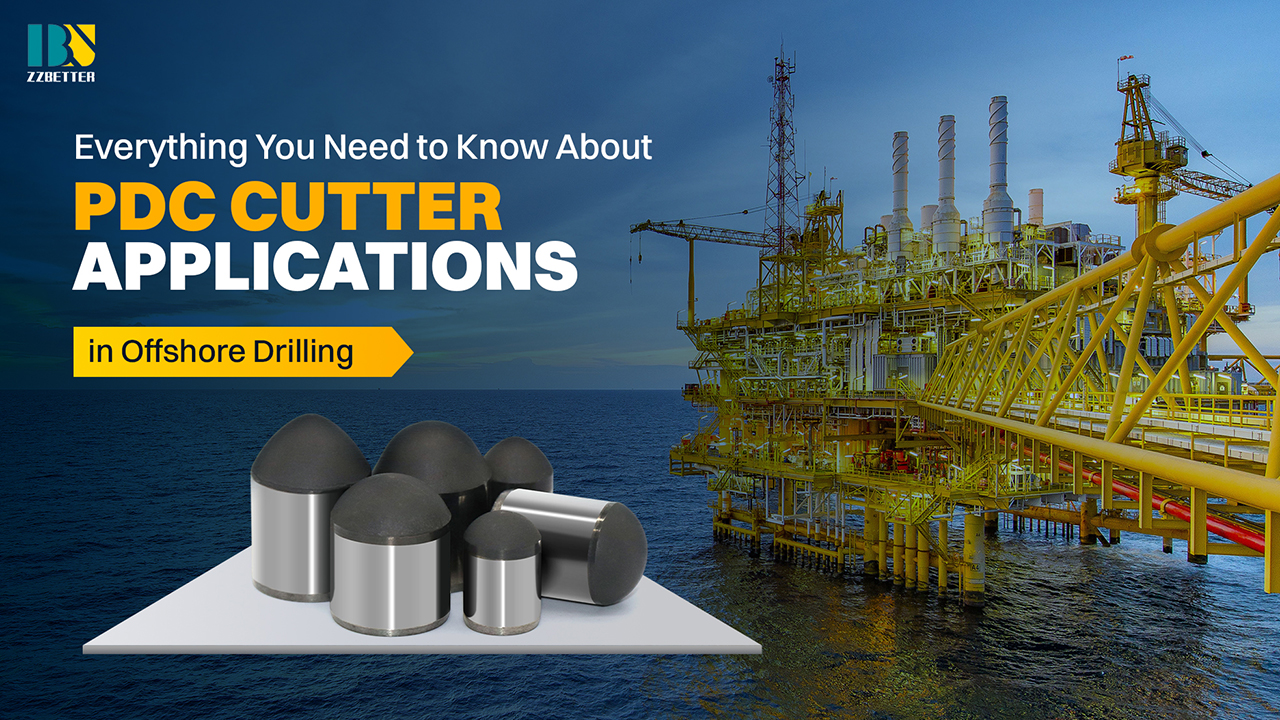
However, success depends on cutter technology and proper selection. Modern PDC cutters feature advanced designs, including shaped cutters (e.g., dome, conical) for better durability and depth-of-cut control, and thermally stable grades to withstand high downhole temperatures. Engineers must match the cutter size, density, and orientation (backrake) on the bit body to the specific formation's abrasiveness and hardness. In hard or interbedded formations, aggressive PDC cutting can cause vibration and premature failure, requiring careful hydraulics and parameter planning.
In summary, PDC cutters are indispensable for modern offshore drilling. Their shearing action drives unprecedented rates of penetration and bit longevity, directly translating into safer, faster, and more economical wells. The continued evolution of cutter technology ensures they will remain at the forefront of conquering the complex drilling challenges of the world's offshore frontiers.