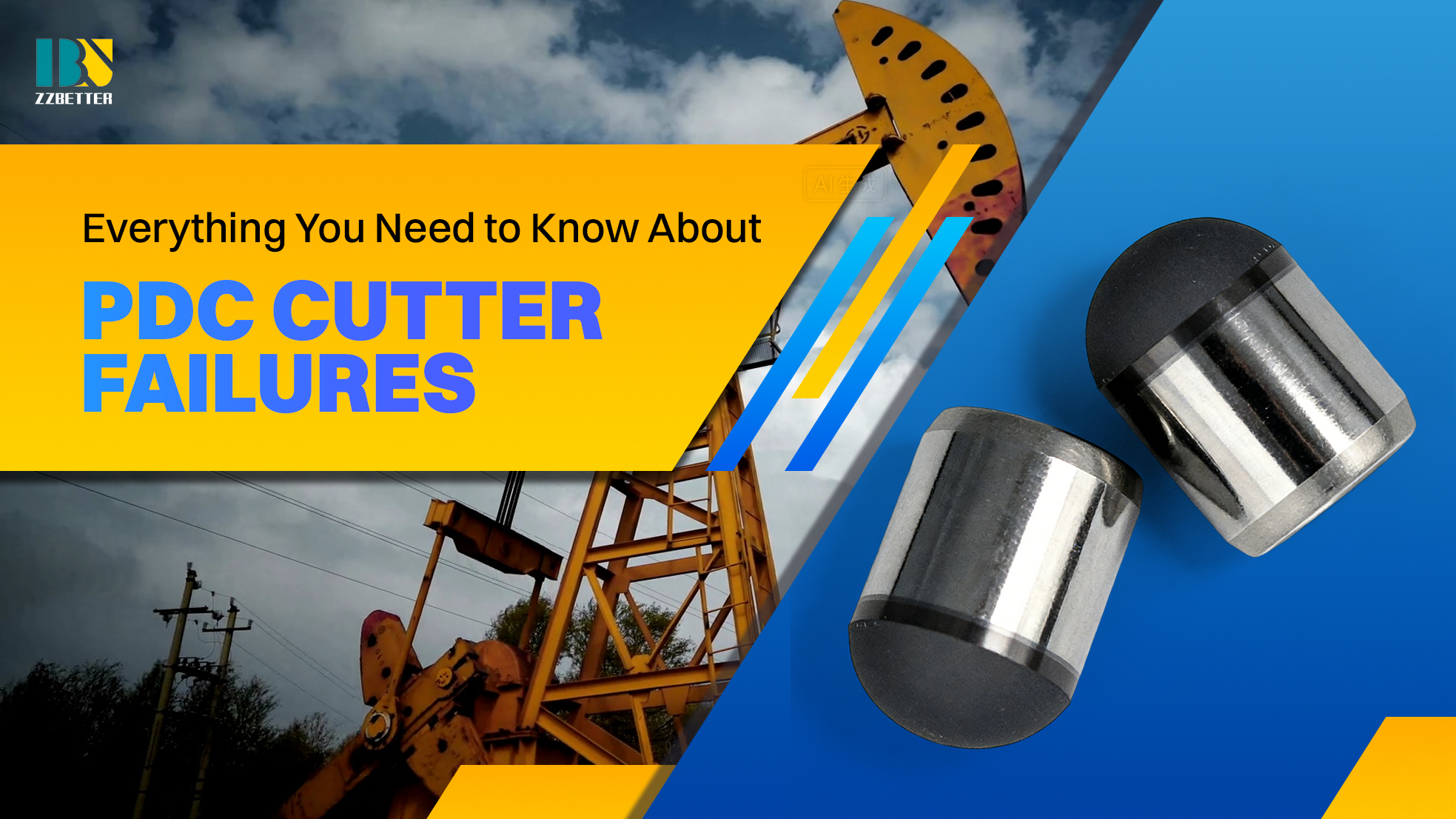
In the high-stakes world of drilling, Polycrystalline Diamond Compact (PDC) cutters are lauded for their efficiency and durability. However, their failure can lead to catastrophic bit damage, costly tripping operations, and significant non-productive time. Understanding the mechanisms and root causes of PDC cutter failure is essential for mitigation and optimal performance.
PDC cutter failure is rarely a simple event; it is typically a progressive degradation triggered by specific downhole conditions and operational factors. The primary failure modes can be categorized as follows:
1. Thermal Mechanical Fatigue and Graphitization: This is the most common and critical failure mechanism. The diamond table, while incredibly hard, is susceptible to thermal degradation. At sustained temperatures above 750°C, the diamond begins to chemically transform back into graphite (graphitization), a process drastically accelerated by the presence of heat and wear. This transformation starts at the cutter’s working surface and edges, creating a weakened, thermally damaged zone. Subsequent mechanical loading—from the impact with rock—then causes spalling, delamination, or catastrophic fracture of the diamond layer. This failure is often a direct result of insufficient cooling from drilling fluid (poor hydraulics) or excessive weight-on-bit (WOB) and RPM generating too much frictional heat.
2. Impact Damage and Fracture: PDC cutters are brittle. Sudden, high-load impacts with hard, abrasive formations (like pyrite nodules), interbedded stringers, or during off-bottom whirling and torsional vibrations (stick-slip) can cause immediate chipping, macro-fractures, or complete shattering of the diamond table. The chamfer (beveled edge) of a modern cutter is designed to absorb some impact, but severe dynamic loading can overwhelm it.
3. Abrasive and Erosive Wear: Gradual, uniform wear is expected. However, highly abrasive formations (e.g., quartz-rich sandstones) can cause accelerated wear flat development on the cutter face. Once a significant wear flat forms, it increases the contact area with the rock, generating more frictional heat and exacerbating thermal failure. Erosive wear from high-velocity drilling fluids carrying abrasive cuttings can also degrade the cutter substrate and braze joint.
4. Delamination and Debonding: This involves the separation of the diamond table from the tungsten carbide substrate. It can be caused by residual stresses from manufacturing, exacerbated by cyclic thermal and mechanical loads downhole. A compromised braze joint between the cutter and the bit body can also lead to complete loss of the cutter.
Mitigation Strategies:
Preventing failure is a multi-faceted endeavor:
● Bit and Cutter Design: Utilizing impact-resistant cutter designs (e.g., shaped cutters, fortified edges), advanced thermally stable diamond blends, and robust hydraulic layouts for optimal cooling.
● Proper Bit Selection: Matching the bit’s cutter size, density, and layout to the expected formation sequence is paramount. Harder formations require more durable, often smaller, cutters.
● Optimal Drilling Parameters: Operating within a stable drilling parameter "sweet spot" to minimize damaging vibrations (stick-slip, whirl) is crucial. This often involves using sophisticated downhole tools and software for real-time optimization.
● Drilling Fluid Performance: Ensuring adequate flow rate, lubricity, and cuttings removal to keep cutters cool and clean.
In conclusion, PDC cutter failures are not random but are the result of identifiable interactions between cutter limits and harsh downhole environments. By understanding the failure modes—thermal degradation, impact, and wear—drilling engineers can make informed decisions on technology selection and operational practices, transforming reactive failure analysis into proactive performance optimization, thereby maximizing the remarkable potential of PDC technology.