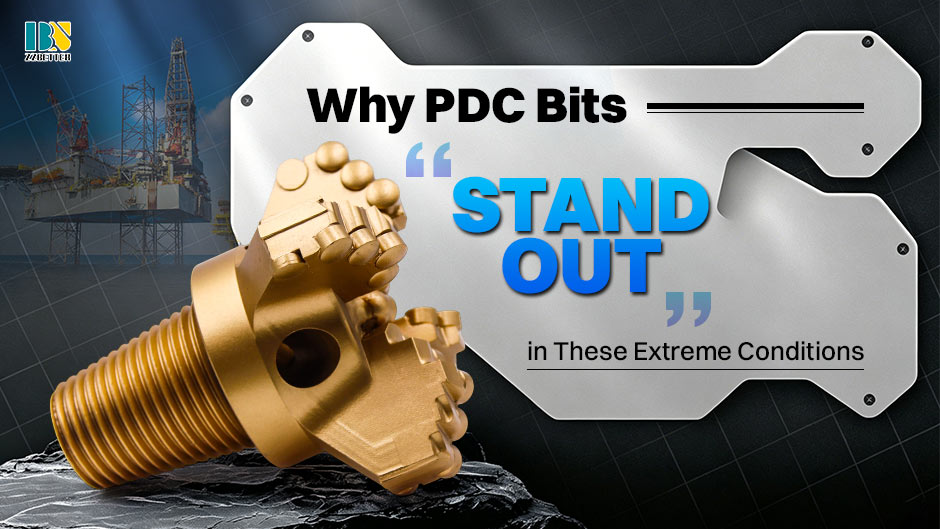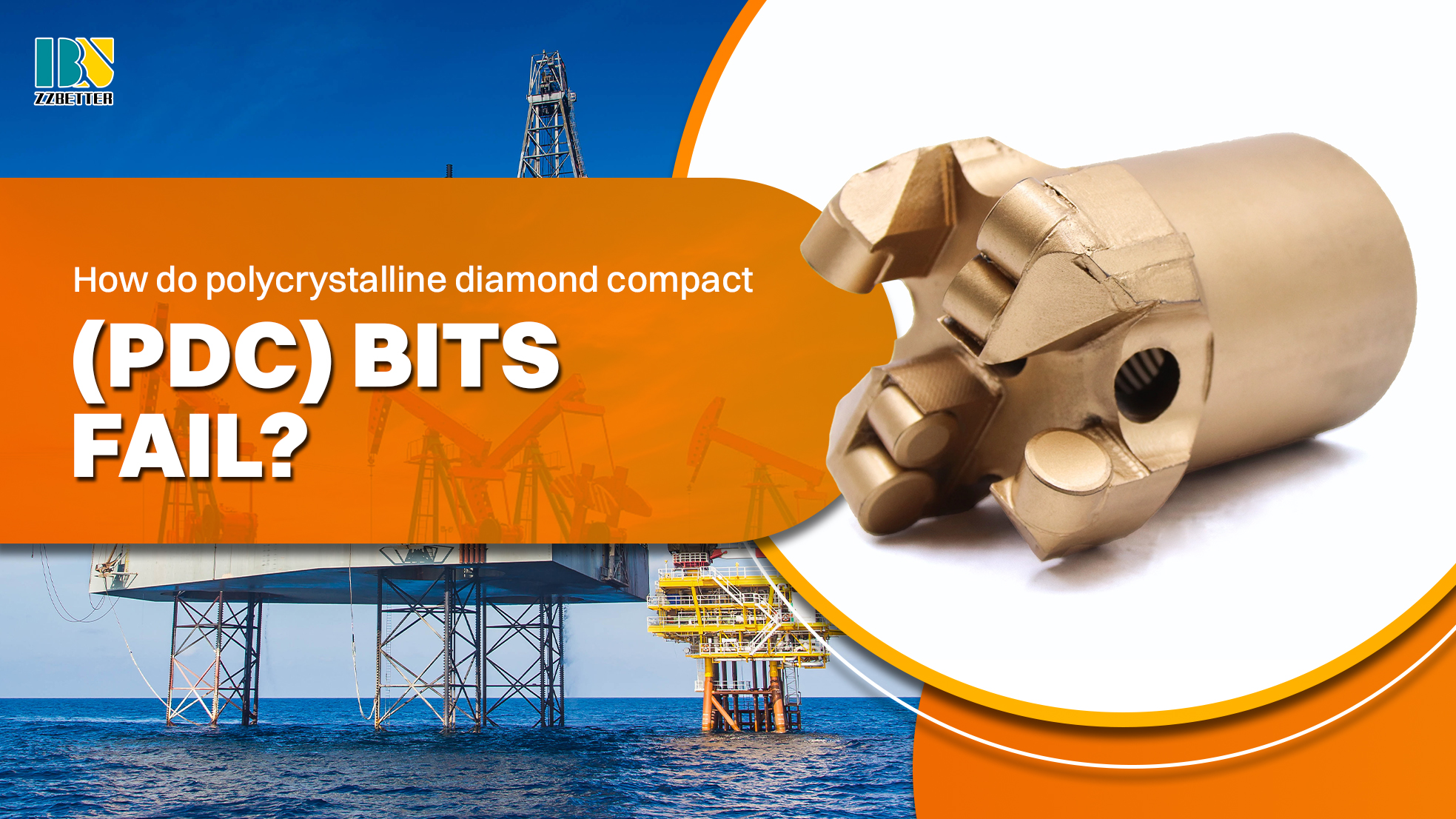
One of the core processes in petroleum extraction is drilling technology, which relies on drilling tools to break rock and drill deeper underground to access oil resources. In this process, the drill bit plays a crucial role, and its key components are made of Polycrystalline Diamond Compact (PDC).
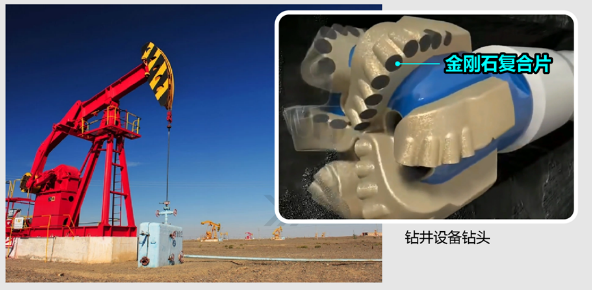
Polycrystalline Diamond Compact is renowned as the hardest material in nature due to its exceptional physical properties. This composite material is sintered from diamond micropowder and a carbide substrate under ultra-high pressure and high temperature. It not only inherits the high hardness, wear resistance, and thermal conductivity of diamond but also possesses the strength and impact resistance of carbide, making it the preferred material for drill bits and other wear-resistant tools. However, in practical engineering applications, such tools often face severe wear issues. So, what are the main failure modes of PDC bits?
1. Smooth Wear
Smooth wear is characterized by a relatively flat wear surface. During the cutting process, both the diamond layer and the WC substrate undergo wear, gradually forming a wear flat. Since WC has lower hardness than diamond, the WC substrate wears first. This causes the diamond near the WC substrate to lose effective support, forming what is known as a "lip." Under repeated cutting forces, the lip experiences tensile stress, leading to the initiation and propagation of cracks, and ultimately causing the lip to fracture. This process reduces the contact area between the unaffected diamond layer and the rock, subjecting it to higher stress and accelerating diamond fracture. Once the entire contact surface of the diamond table is destroyed, the WC substrate re-engages effectively with the rock, and a new cycle of smooth wear begins. Compared to other failure modes, smooth wear is relatively slow and is considered a normal failure mode.
2. Micro-Chipping
Micro-chipping manifests as small, flake-like fractures in the diamond table along the cutting direction. Cracks typically originate on the rounded surface of the diamond and propagate inward, forming micro-scale flake fractures. Micro-chipping usually occurs after the drill bit has been in operation for some time, due to fluctuating loads during drilling and alternating local temperature and cooling conditions on the PDC surface. As a result, the PDC experiences both mechanical fatigue and thermal fatigue. After a certain number of cycles, cracks initiate and propagate, leading to micro-chipping. Compared to smooth wear, micro-chipping failure progresses more rapidly and causes more severe damage.
3. Macro-Fracture
Macro-fracture refers to the large-scale breakage of the diamond layer, with cracks typically originating from the cylindrical surface of the diamond table. This is the most severe form of failure for PDC cutters and often renders the drill bit unusable. When the drill bit encounters hard rock or formations with significant lithological variations during drilling, it is subjected to substantial impact loads. Particularly when the contact area between the PDC cutter and the rock is small, the cutter may experience overload in a short time, leading to large-scale macro-fracture. Additionally, if broken drill bit fragments or other rigid objects at the bottom of the well are not promptly removed, they can cause abnormal impacts on the operating drill bit, resulting in macro-fracture. To reduce the occurrence of macro-fracture, maintaining stable weight on bit and drilling speed, while avoiding significant impacts, is essential.
4. Delamination
Delamination refers to the adhesive failure between the diamond layer and the carbide substrate, leading to loss of cutting ability at the edge. During cutting, the cutter heats up due to frictional heat. When the drill bit temporarily loses contact with the formation, such as due to vibration, it is rapidly cooled by the drilling fluid. Due to differences in the thermal expansion coefficients of the layers in the PDC, significant internal stress is generated. When this stress exceeds the bond strength, delamination occurs. When analyzing drill bits that have failed due to delamination, macro-fracture is often found alongside. Therefore, it can be concluded that short-duration impact overload is also one of the causes of delamination failure.
5. Thermal Cracking
Thermal cracking appears as a network of fine cracks on the surface of the PDC material, extending to a certain depth. It is caused by alternating thermal stresses. Thermal cracking can occur in both the WC substrate and the diamond layer, particularly on the material surface where thermal stress is highest. The mechanism of thermal cracking begins with the formation of a large wear flat and the generation of sufficient heat. Subsequently, after multiple thermal cycles, the thermal stress becomes high enough to cause thermal cracking on the material surface. Thermal cracking is an inevitable consequence of wear failure. Although wear of PDC bits is unavoidable, we can employ various measures, from design to usage, focusing on protection to delay premature failure, thereby improving work efficiency and reducing costs.